大阪
从美食到购物,应有尽有!
前往主要火车站附近享受一流的购物体验,品尝章鱼烧和御好烧等当地特色美食。


相关文章
-

〈2026〉Best 15 Places to See Autumn Leaves in Japan (Kyoto, Osaka and More)!
Japan in autumn colors. Here are some of the best places in Kansai to see the autumn leaves, by area, from once-in-a-lifetime viewing spots to hidden gems. Please refer to the fall tourism in 2026. -INDEX- Things to keep in mind when visiting temples and shrines in Japan 【KYOTO】 〇Higashiyama Area Famous place:Eikando(Zenrin-ji) Little known good spot:Anrakuji 〇Arashiyama Area Famous place:Daikaku-ji Temple Famous place:Jojakko-ji Little known good spot:Jizoin(Takedera/Bamboo Temple) 〇Other Area Famous place:Rurikoin Little known good spot:Komyo-ji 【OSAKA】 Famous place:Minoh Waterfall Little known good spot:Katsuo-ji 【KOBE】 Famous place:Sorakuen Garden Famous place:Kobe Municipal Arboretum Little known good spot:Rokko Alpine Botanical Garden Little known good spot:Rokko-Arima Ropeway 【Other Area】 Himeji:KOKO-EN Nara:Hasedera temple FAQs About Fall Foliage in Osaka, Kyoto, and Kobe When visiting temples and shrines, be sure to observe proper etiquette and manners. Here are some guidelines that apply to both temples and shrines. 1. Do not speak loudly. Temples and shrines are sacred places, so please enjoy them quietly. 2. Do not eat or drink on the grounds. This is strictly prohibited. Even outdoors, it may be considered a breach of etiquette, so please be careful. 3. Do not touch buildings, torii gates, or statues. Leaning on torii gates or touching Buddhist statues is strictly prohibited. Treat these sacred objects with respect. 4. Confirm photography rules. Photography is prohibited in many areas, so check signs and notices before taking photos. 5. Do not walk in the middle of the approach. The middle of the approach is the path for the gods, so walk on the side. In addition, the methods of worship differ between temples and shrines. At shrines, it is common to worship with two bows, two claps, and one bow, but at temples, clapping is not done. Observe etiquette and manners, and enjoy visiting temples and shrines. 🍁Usual viewing time: mid-November to late November Eikando is the best place in Higashiyama to view the autumn leaves. About 3,000 maple trees cover the entire precincts of the temple. The sight of the tallest pagoda, Dabotou, enveloped by the autumn leaves is a fantastic sight. Japanese maples are planted around the Housho Pond, and the reflection of the Japanese maples and the Gokuraku Bridge in the water is a must-see. 🍁Usual viewing time: mid-November to late November Normally closed to the public, this special temple is open to the public only during the cherry blossom and autumn foliage seasons. Within walking distance is the Philosopher’s Path, which is tinted in autumn, so a walk along this path is recommended. Highlights include the scattered autumn leaves that turn the stone steps of the temple gate bright red and the beautiful garden with Nyoigatake in the background. Scheduled Special Opening Dates: November 1 (Sun), 2 (Mon), 3 (Tue), 7 (Sat), 8 (Sun), 14 (Sat), 15 (Sun), and 21 (Sat) through December 6 (Sun), 2026 *Gates open at 12:00 PM on Sunday, the 8th ▼Check this article▼ 【Kyoto】1 Day Trip|Let’s walk around Higashiyama, Kyoto to see the autumn leaves! 🍁Usual viewing time: Mid-November to late November The combination of the beautiful colors of the pagoda and the fiery maple leaves is gorgeous. Osawa Pond to the east is also a popular spot for viewing autumn leaves. The reflection of the autumn scenery on the surface of the water is fantastic. ▼Food info of Arashiyama area▼ Kyoto Arashiyama Sightseeing Half-day Model Course! Capture the bamboo forest, temples, nature, and major spots! 9 Sweets in Arashiyama, Kyoto, from Easy Eats to Stylish Cafes 🍁Usual viewing time: Mid-November to late November This temple is located on Mt. Ogura, known for the Ogura Hyakunin Isshitsu. In autumn, the approach from the entrance gate to the Niomon Gate is covered in autumn leaves, creating a tunnel of foliage. The autumn leaves surrounding the 12-meter tall Dabotou (pagoda), which is located at the top of the stone steps, is a must-see. The precincts of the temple and the area around the pagoda also offer a panoramic view of Kyoto City. 🍁Usual viewing time: late November Jizoin (Takedera/Bamboo Temple) is a Zen temple with beautiful bamboo groves, as its name suggests, and is a well-known spot for autumn leaves among those in the know. The trees change color later than other places in Kyoto, and the autumn leaves can be enjoyed until mid-December. Surrounded by lush bamboo groves, the contrast between the green of the bamboo and the changing colors of the autumn leaves is magnificent. The heart-shaped window, Inome-mado, in the Hojo is also open to the public. The autumn leaves cut by the window are breathtakingly beautiful. 🍁Usual viewing time: mid-November to late November Ruriko-in Temple is a popular spot in Rakuhoku Yase, and the spectacular view of the autumn leaves reflecting on the lacquered desk on the second floor is a sight to behold. Anyone can take pictures of this spectacular view by holding up a camera at the desk. It will be released in spring, summer, and autumn. Please enjoy the wide-open view of the autumn leaves as they spread across your field of vision. Special viewing period: October 1, 2026 (Thu) – December 13, 2026 (Sun) *From Saturday, November 13 to December 6, advance reservations will be accepted by lottery. Please check the official website for details. 🍁Usual viewing time: Mid-November to early December Sohonzan Komyoji Temple is located at the foot of Nishiyama in Nagaokakyo City. Visitors can see the rich expression of nature in each of the four seasons. Every year from mid-November to early December, a special entrance to the temple is held for the autumn foliage. The maple approach to the temple, with its impressive lineup of about 250 old maple trees, is a superb photo spot. Nishiyama is one of Kyoto’s best but not well-known sightseeing spots. If you want to enjoy Kyoto without the crowds, or if you want to visit a spot that is not yet known, check out the article below. Special Access Period: November 14, 2026– December 6, 2026 ▼Check this article▼ Kyoto Nishiyama|An undiscovered sightseeing spot in Kyoto! 🍁Usual viewing time: mid-November to early December Minoh Great Falls is one of the best places in Osaka to view the autumn leaves. The contrast between the waterfall and the autumn leaves in the vast Minoh Park is spectacular. You can enjoy the autumn leaves everywhere along the 2.6 km route from Hankyu Minoh Station to the falls. If you come to Minoh, you must try the famous “Momiji no Tempura” (maple leaf tempura). It is a slightly sweet and crunchy snack made by carefully frying real maple leaves one by one. You can buy it at a store on Takimichi. ▼Check this article▼ Minoh, Osaka-1 Day Trip|Enjoy The Most Beautiful Nature in Osaka! Hiking at Minoh Waterfalls and Katsuo-ji Temple Note on how to get to Minoh Waterfall! Points that international travelers should know before going there 🍁Usual viewing time: mid-November to early December Known since ancient times as a temple of good fortune, the precincts of Minoh’s Katsuo-ji Temple are decorated with brilliant autumn leaves in November. The tunnel of autumn leaves covering the approach to the temple is especially spectacular. The contrast between the green mountains in the background and the autumn leaves is like a painting. Katsuo-ji Temple is also known as the temple of “Kachi-Dharma”. Small Dharma dolls are laid everywhere, including on the stairs and stone walls. Please enjoy the adorable Dharma and beautiful nature. ▼Check this article▼ What is the highlight of Katsuo-ji in Minoh? A temple of luck to win in Osaka sightseeing ▼Check out this article for directions to Katsuo-ji Temple▼ [Train & Bus Guide] How to Get to Katsuo-ji Temple in Osaka? Key Travel Tips for International Visitors 🍁Usual viewing time: mid-November to early December Sorakuen Garden is the only Japanese garden in Kobe City’s urban parks. It is a kaiyu-style garden with a pond, with stepping stones and stone bridges across which visitors can view streams and waterfalls. The garden is famous for azaleas in spring, and in autumn the garden is decorated with autumn leaves. Important cultural properties such as the boathouse and the former Hassam residence, which were relocated for preservation, are also highlights. Why not enjoy an authentic Japanese garden and fall foliage viewing in the city of Kobe? ▼Check this article▼ 10 Delicious Gourmet Foods in Kobe! Local Specialties and Local Foods Recommended by Locals 🍁Usual viewing time: late October – early November The park is divided into different regions of the world, such as North America and Europe, and different types of trees, so that visitors can learn about the diverse beauty of autumn leaves. The area around Hase Pond is a particularly beautiful spot for viewing the autumn colors in a water mirror. Let’s take a stroll through the vast park and enjoy the world tour of autumn leaves! ▼Sightseeing and food info of Kobe▼ 10 Delicious Gourmet Foods in Kobe! Local Specialties and Local Foods Recommended by Locals First Time in Kobe. 21 Best Things to Do! Sightseeing, Spots, Dining, Model Course 🍁Usual viewing time: late October – early November Located at an altitude of 865 meters, the Rokko Alpine Botanical Garden reaches its autumn foliage season earlier than the city. Trees like maples and beeches typically begin to change color from mid-October, with the peak season lasting until mid-November. Taking advantage of the climate, which is similar to southern Hokkaido, the garden cultivates alpine plants, allowing visitors to enjoy the autumn colors of a wide variety of rare plants. During KOBE ROKKO MEETS ART 2026 beyond, from Saturday, September 19 to November 29, 2026, light artworks and illuminated autumn leaves will be on display on Saturdays, Sundays, and holidays! ▼KOBE ROKKO MEETS ART 2026 beyond Information▼ KOBE ROKKO MEETS ART 2026 beyond |Review and Sample Itineraries 🍁Usual viewing time: late October – early November The Rokko-Arima Ropeway connects the top of Mt. Rokko and Arima Onsen in about 12 minutes. Visitors can enjoy the changing autumn leaves depending on the elevation. The view of the autumn foliage from the gondola’s large foot-high windows is spectacular. Don’t forget to visit Rokko Mountain, where “KOBE ROKKO MEETS ART 2026 beyond” will be held from August 29 to November 29, 2026, and Arima Onsen to enjoy art, hot springs, and gourmet food! ▼Check this article▼ Arima Onsen-1 Day Trip|Enjoy Hot Springs, Gourmet, and Nature! The 10 best food and sweets in Arima Onsen Town 🍁Usual viewing time: mid-November to late November There are nine gardens of different styles with Himeji Castle, which is registered as a World Heritage site, in the background. Because of the atmosphere of the Edo period, the gardens are often used for filming movies and TV dramas. In the fall, the Autumn Foliage Festival is held from November 17 to December 6, 2026. The best time to visit is during the “Momiji-kai” (autumn foliage viewing), when the leaves are illuminated for a fantastic view. You can enjoy a fantastic view that is different from that of daytime. During this period, the park is open until 20:00.(Last admission is at 19:30) 🍁Usual viewing time: late November – mid December Hasedera Temple, located in Sakurai City, Nara Prefecture, is known as the “Temple of Flowers”. The temple is open twice a year, in spring and fall, for a limited time for special visits. A must-see spot is the floor of the hall of worship. In autumn, visitors can enjoy the “Yuka-momiji” (floor maple leaves) that turn bright red. The view of the autumn leaves from the stage in front of the main hall is not to be missed. The five-story pagoda surrounded by autumn leaves is a magnificent sight. Be sure to visit Hasedera Temple, where the entire mountain is decorated with autumn leaves. Special Viewing: October 5, 2026 (Sat) – December 8, 2026 (Sun) (Separate admission fee of 1,000 yen) Q. When is the best time to see the fall foliage in 2026? A. As of September 4, the forecast is for conditions similar to the average year. In the lowlands, the peak viewing period is expected to be from late November through mid-December, while in the mountainous areas, it is expected to be from early November through early December. Autumn in Japan is very vivid. The temperature has dropped, making it comfortable to be out. There are so many places to see the autumn leaves that it is impossible to visit them all at once. Please find your favorite spot and enjoy the autumn foliage as you wish.
-
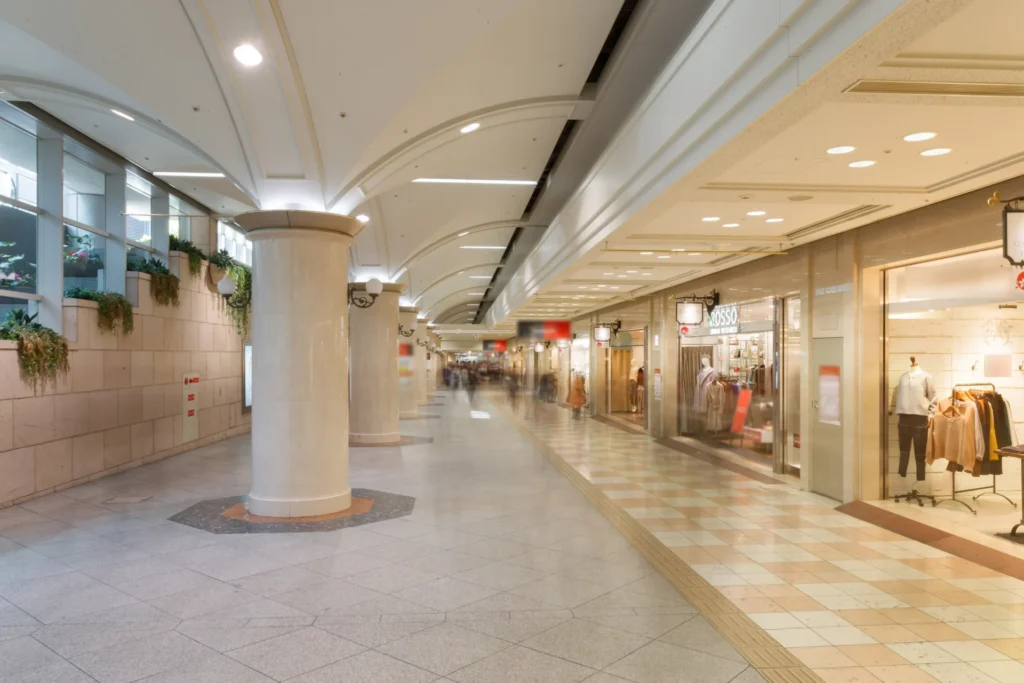
大阪梅田地下商店街完全指南:尽情享受购物和美食,再也不用担心迷路
Osaka Umeda’s vast underground shopping streets are so complex that they are often nicknamed a “maze.” They may seem intimidating at first, but they are actually a fantastic place to enjoy shopping and dining to your heart’s content, without having to worry about the weather. In this guide, we’ll focus on popular areas such as HANKYU SANBAN GAI and Diamor Osaka, introducing recommended shops as well as tips for navigating Umeda’s underground streets without getting lost. If it’s your first time visiting Umeda, be sure to read until the end! Index 1. Why is Osaka Umeda’s Underground Area Called a “Maze”? 2. A Quick Comparison of 3 Umeda’s Major Underground Shopping Areas 3. Complete Guide to Each Area ・HANKYU SANBAN GAI ・Whity Umeda ・Diamor Osaka 4. Tips for First-Timers on Navigating the Umeda Underground Streets 5. Frequently Asked Questions (FAQ) Make Exploring Umeda Even Easier! The following Google Maps list features the shops introduced in this article. Save and use it as a handy guide while exploring Osaka Umeda. ▶Complete Guide to Umeda’s Underground Shopping Streets: Shop List Underneath the Umeda area, one of western Japan’s largest transportation hubs, lies a vast underground network covering more than 100,000 square meters. The main reasons first-time visitors tend to get lost are the following three: ■ Five major stations are interconnected underground: JR, Hankyu, Hanshin, and multiple Osaka Metro lines (Midosuji, Tanimachi, and Yotsubashi Lines) are all connected through a complex underground network. ■ Each underground shopping area has its own name and atmosphere: Several independent underground shopping areas are seamlessly connected, making it easy to cross from one area to another without realizing it. ■ There are few above-ground landmarks: Since you can’t see buildings or the sky, it can be difficult to tell which direction you’re heading. But once you know a few key tips for navigating the area, there’s no need to worry! In fact, Umeda’s underground streets are a traveler’s best friend: you can get around without worrying about rain, summer heat, or winter cold, while enjoying shopping and delicious food all in one place. Once you get the hang of it, few areas are as convenient and enjoyable to explore! Umeda’s underground shopping streets can be broadly divided into three main areas connected from north to south: HANKYU SANBAN GAI in the north, Whity Umeda, which connects the various areas in the center, and Diamor Osaka in the south. Choose the area you want to visit based on what you’re looking for! Area Features & Atmosphere Recommended For HANKYU SANBAN GAI Directly connected to Hankyu Osaka-umeda Station. A wide variety of shops, including character goods, anime merchandise, casual dining, and a huge food court! Families & Anime Fans Perfect for souvenir shopping or grabbing a quick meal. Whity Umeda The “main artery” of Umeda’s underground network, connecting the northern and southern areas as well as the different stations. Lined with numerous restaurants, drugstores, and other shops. Transit Hub & Everyday User Convenient to use as a route between destinations, while also perfect for picking up essentials at drugstores and other shops. Diamor Osaka Located near Hanshin Osaka-Umeda Station and Kitashinchi Station on the JR Tozai Line. A sophisticated space inspired by European streets, featuring high ceilings and distinctive glass roofs that let in natural light. Women & Fashion Lovers Ideal for leisurely browsing trendy cosmetics, fashion, and stylish cafés. HANKYU SANBAN GAI is a long, north-to-south shopping area located directly beneath Hankyu Osaka-umeda Station. The complex is divided into the North Building and South Building. On B1F of the North Building, you’ll find a wide variety of character goods shops filled with Japan’s iconic “Kawaii” culture. From souvenir shopping to satisfying meals, you can enjoy everything in one place, making it a convenient and fun spot to explore! Basic Information 〇Hours Shopping & General Goods: 10:00 AM–9:00 PM Restaurants & Cafés: 10:00 AM–11:00 PM ※Hours are subject to change. ※Hours may vary by store. 〇Closed Irregular holidays (the facility is closed on several days each year) 〇Nearest Exit & Access Directly connected to Hankyu Osaka-umeda Station 1 min walk from Osaka Metro Midosuji Line Umeda Station Recommended Shops & Dining Located in HANKYU SANBAN GAI, just a short walk from Hankyu Osaka-umeda Station, KIDDY LAND Osaka Umeda Store is a popular shop offering a wide selection of character merchandise featuring some of Japan’s most beloved characters. Among the highlights are Monchhichi, the iconic character born in Japan, and Hello Kitty, a character loved around the world. Here, you can discover memorable souvenirs while experiencing a unique part of Japan’s character culture. It’s also fun to look for items you can only find here, including Japan-exclusive designs and limited-edition collaboration merchandise that appears at different times of the year. With plenty of compact, easy-to-carry items, the store is also perfect for picking up souvenirs. If you want to enjoy Japan’s “Kawaii” culture in Osaka and Umeda, be sure to stop by during your shopping trip! 📍 Check Now! The shops and restaurants introduced in this article at HANKYU SANBAN GAI are compiled into a Google Maps list for easy reference. View the store locations on Google Maps This lifestyle shop offers a wide selection of stylish imported goods and trendy fashion accessories that add a touch of color to everyday life. Inside, you’ll find a variety of practical bags and pouches that are perfect for traveling, along with seasonal accessories and other fashionable items. The shop’s tasteful everyday goods are also popular as souvenirs, making it an ideal place to stop by while shopping at HANKYU SANBAN GAI and discover a favorite item of your own. 📍 Check Now! The shops and restaurants introduced in this article at HANKYU SANBAN GAI are compiled into a Google Maps list for easy reference. View the store locations on Google Maps Founded in 1922, Hokkyokusei is a legendary long-established restaurant widely regarded as the birthplace of omurice in Japan. The restaurant’s signature omurice is wrapped in a delicate, fluffy thin omelet prepared skillfully by its chefs. Paired with the restaurant’s special omurice sauce, it has a comforting, nostalgic flavor that will take you back to the roots of this beloved Japanese dish. Experience this traditional taste, which represents Japan’s yoshoku (Western-style Japanese cuisine) culture, right here in its hometown of Osaka. Be sure to also try some of the restaurant’s popular specialties, including Beef Stroganoff and Beef Curry Omurice! 📍 Check Now! The shops and restaurants introduced in this article at HANKYU SANBAN GAI are compiled into a Google Maps list for easy reference. View the store locations on Google Maps A must-visit for meat lovers, Nikunju Roman Tei is a specialty restaurant backed by a long-established meat wholesaler. Premium beef carefully selected by meat professionals is grilled to perfection with a secret sweet-and-savory sauce, then generously arranged over a bowl of steaming rice. Popular choices include the signature Steak Jyu and the indulgent Japanese Black Beef Sukiyaki Jyu, allowing you to enjoy high-quality beef dishes at reasonable prices. With its relaxed atmosphere and simple focus on delicious meat and rice, it’s an excellent choice for both lunch and dinner. 📍 Check Now! The shops and restaurants introduced in this article at HANKYU SANBAN GAI are compiled into a Google Maps list for easy reference. View the store locations on Google Maps A specialty all-you-can-eat restaurant where you can enjoy high-quality meat and fresh seasonal vegetables to your heart’s content, prepared as shabu-shabu or sukiyaki. Simply dip your carefully selected meat and fresh ingredients into your choice of broth, such as kombu dashi, or enjoy them with the restaurant’s special sukiyaki sauce. It’s a delicious and healthy way to experience authentic Japanese cuisine. With its spacious dining area, Shabu Sai is ideal for families and groups, offering a satisfying Japanese dining experience that will leave both your stomach and your heart full—and give you a memorable experience to take home from your trip. 📍 Check Now! The shops and restaurants introduced in this article at HANKYU SANBAN GAI are compiled into a Google Maps list for easy reference. View the store locations on Google Maps With approximately 1,000 seats, UMEDA FOOD HALL is a spacious, stylish, and modern food hall where you can enjoy a wide variety of popular restaurants and cuisines, from famous Osaka specialties to the latest food trends. It’s especially convenient for groups, as everyone can choose their favorite dishes from different restaurants and enjoy them together at the same table. It’s also a great option when you’re looking for a quick and convenient meal while exploring Umeda. 📍 Check Now! The shops and restaurants introduced in this article at HANKYU SANBAN GAI are compiled into a Google Maps list for easy reference. View the store locations on Google Maps Whity Umeda is the central “main artery” of Umeda’s underground shopping district, with approximately 400,000 people passing through every day. It stretches out in a cross-shaped network connecting HANKYU SANBAN GAI to the north, Diamor Osaka to the south, the Higashi-Umeda and Doyama areas to the east, and JR Osaka Station and Hanshin Department Store to the west. The passages are lined with a wide variety of shops, including drugstores, casual restaurants, and stores selling everyday essentials. The lively atmosphere makes it one of the busiest and most vibrant parts of Umeda’s underground shopping network. Basic Information 〇Hours Shopping: 10:00 AM–9:00 PM Dining & Cafés: 10:00 AM–10:00 PM NOMOKA Area: 11:00 AM–11:00 PM ※Hours may vary by store. 〇Closed Irregular holidays (the facility is closed on several days each year) 〇Nearest Exits & Access Osaka Metro Tanimachi Line Higashi-Umeda Station: Directly connected via the North-East and North-West Gates, toward Exit 1 Osaka Metro Midosuji Line Umeda Station: Directly connected via the South Gate, toward Exit 13 Hanshin Osaka-Umeda Station: Directly connected from the East Gate Hankyu Osaka-umeda Station: 3 min walk from the 2F Central Gate or 3F Gate JR Osaka Station: 3 min walk from the Midosuji Exit Navigation Tips The key to navigating Whity Umeda is to use it as a “crossroads” for getting smoothly to your destination. 〇【Head North】Toward HANKYU SANBAN GAI & HEP FIVE From the North Gate area of Osaka Metro Umeda Station, head north to connect to HANKYU SANBAN GAI, home to character goods shops and a large food hall. This is also a convenient route if you’re heading toward HEP FIVE and its iconic red Ferris wheel. 〇【Head South】Toward Diamor Osaka, Hanshin Department Store & Kitashinchi Walk straight south to reach Diamor Osaka, known for its sophisticated European-inspired atmosphere, as well as the basement food hall of Hanshin Department Store, where you’ll find a wide selection of famous local specialties. Diamor Osaka is a bright, elegant underground shopping area inspired by the grand arcades, or gallerias, of Italy. Four streets intersect around a central circular plaza, while natural light pours in through the high glass ceiling, creating an open and spacious atmosphere despite being underground. The area is home to a great selection of trendy fashion brands, popular cosmetics shops, and sophisticated cafés, making it the perfect place for those who want to enjoy a relaxed shopping experience in a refined atmosphere. Basic Information 〇Hours Shopping: 10:00 AM–8:00 PM Restaurants: 11:00 AM–10:00 PM ※Hours may vary by store. 〇Closed Irregular holidays (the facility is closed on several days each year) 〇Nearest Exits & Access 4 min walk from Osaka Metro Tanimachi Line Higashi-Umeda Station 4 min walk from Osaka Metro Midosuji Line Umeda Station 4 min walk from Osaka Metro Yotsubashi Line Nishi-Umeda Station 4 min walk from Hanshin Osaka-Umeda Station 4 min walk from Hankyu Osaka-umeda Station 4 min walk from JR Osaka Station Midosuji Exit Recommended Shops & Dining This popular cosmetics select shop brings together major Japanese skincare and makeup brands, including DECORTÉ, SHISEIDO, and KANEBO, all in one convenient location. The spacious store is packed with the latest trending skincare products and exclusive items. With knowledgeable staff on hand, you can take your time trying different products and finding the ones that best suit you. Whether you’re looking for a special treat for yourself or souvenirs featuring Japanese cosmetics, Misugi Cosme Garden is a must-visit spot in Umeda. 📍 Check Now! The shops and restaurants introduced in this article at Diamor Osaka are compiled into a Google Maps list for easy reference. View the store locations on Google Maps DIANA is a popular Japanese shoe and bag brand loved by women across Japan for its refined designs, attention to detail, and comfortable fit. The collection features a wide range of sizes and styles, from trendy pumps and boots to comfortable sneakers that are easy to walk in. Combining elegance with a high-quality fit, these shoes are perfect for exploring the city during your trip and also make a thoughtful gift for someone special. 📍 Check Now! The shops and restaurants introduced in this article at Diamor Osaka are compiled into a Google Maps list for easy reference. View the store locations on Google Maps With the concept “Let Your Heart Dance,” Heartdance is a popular shop offering a wide selection of cute and affordable accessories. From hair accessories, earrings, and necklaces to other trendy pieces, there’s something for every occasion, whether for everyday wear or a special party look. With its affordable prices and compact, easy-to-carry items, Heartdance is a great place to find travel keepsakes or small gifts for friends. 📍 Check Now! The shops and restaurants introduced in this article at Diamor Osaka are compiled into a Google Maps list for easy reference. View the store locations on Google Maps GODIVA café is an elegant café created by the renowned Belgian luxury chocolate brand GODIVA. From rich chocolate drinks such as the chocolatier’s signature Chocolixir to seasonal sweets and light meals, you can enjoy a luxurious selection in a sophisticated setting. It’s the perfect place to take a stylish and indulgent break during your shopping trip, while enjoying the refined atmosphere and views of Diamor Osaka’s elegant streetscape. 📍 Check Now! The shops and restaurants introduced in this article at Diamor Osaka are compiled into a Google Maps list for easy reference. View the store locations on Google Maps Although Umeda’s underground shopping streets are often called a giant “maze,” once you get the hang of a few tricks, you can reach your destination without getting lost. Keep these two simple techniques in mind to make your journey smoother! ・Check the Exit Numbers Look for numbers such as “M14” on the signs above you. Remembering the exit number closest to your destination will make it much easier to find your way. ・Use Nearby Shops to Pinpoint Your Location on Google Maps GPS can be inaccurate underground, so a useful trick is to compare the names of nearby shops shown on Google Maps with the actual signs around you. This will help you figure out where you are and which direction to go. Q. Are all three facilities—HANKYU SANBAN GAI, Whity Umeda, and Diamor Osaka—entirely underground? A. They are basically underground shopping areas, but HANKYU SANBAN GAI also has shops and station facilities above ground on the 1st and 2nd floors. Whity Umeda and Diamor Osaka are entirely underground. Q. What time are they open until? A. Opening hours vary by facility. ・HANKYU SANBAN GAI: Shopping 10:00 AM–9:00 PM; Restaurants 10:00 AM–11:00 PM ※Hours are subject to change. Hours may vary by store. ・Whity Umeda: Shopping 10:00 AM–9:00 PM; Dining 10:00 AM–10:00 PM ※Hours may vary by store. ・Diamor Osaka: Shopping 10:00 AM–8:00 PM; Restaurants 11:00 AM–10:00 PM ※Hours may vary by store. Q. Can I use credit cards and mobile payments? A. Most stores accept major credit cards, transportation IC cards such as Suica and ICOCA, and mobile payment services such as Alipay and WeChat Pay. ※Please check with individual stores for accepted payment methods. Q. Can I get around with a suitcase? A. Yes. Elevators and ramps are available, making it possible to navigate the underground shopping areas with a suitcase. There are also many coin lockers at the major stations.
-

日本11种最佳秋季花卉|玫瑰、大丽花、波斯菊和地肤
From the end of the hot summer to the beginning of the fall foliage, pretty flowers bloom beautifully under the fresh blue sky. There are many colorful and beautiful sights unique to this season. In addition to introducing typical autumn flowers and plants, we will also introduce autumn flower spots in the Kansai region. The best time to see the flowers is only a guide, so please check the web before you go. 【Cosmos】Best time to visit: early October to early November (NARA)HANNYAJI (HYOGO・AMAGASAKI)Mukogawa Hige no watashi cosmos garden (OSAKA)Toyono Cosmos-no-sato (OSAKA)Tsurumi Ryokuchi Park 【Kochia】Best time to visit: Early October to late October (OSAKA)Expo ’70 Commemorative Park (HYOGO)Kobe Nunobiki Herb Garden (SHIGA)Biwako Hakodateyama 【Dahlia】Best time to visit: early October to early November (HYOGO・TAKARAZUKA)Takarazuka Dahlia Garden 【Rose】Best time to visit: Mid-October to early November (HYOGO・ITAMI)Aramaki Rose Park (HYOGO・SUMA)Kobe Suma Rikyu Park (OSAKA)Nakanoshima Rose Garden The cosmos is a typical Japanese autumnal flower. Blooming in the autumn sky, swaying gently in the wind, cosmos make a magnificent sight when planted in clusters. They come in a variety of colors, including pink, red, white, and yellow. Hannya-ji Temple is known as a temple where flowers bloom from season to season. It is especially famous for its cosmos in autumn and is nicknamed “Cosmos Temple”. About 150,000 cosmos trees of 30 different varieties are planted, and when they are in full bloom, the cosmos flowers look as if they are enveloping the old hall and stone Buddha, creating a charming atmosphere. Glittering glass cubes of cosmos are placed here and there in the precincts of the temple. These glass squares are decorated with cosmos flowers floating in water, looking like jewels. The Mukogawa Hige no watashi cosmos garden was established in 2003. The riverbed, which was once in disrepair, has been transformed into a magnificent cosmos garden through the efforts of local residents. It has now become a well-known cosmos garden, attracting many visitors every year. From mid-October to mid-November, when the cosmos are in full bloom, a carpet of approximately 5.5 million brightly colored cosmos will spread over the riverbed. The cosmos garden was started by flower enthusiasts about 30 years ago, and is a popular cosmos viewing spot that attracts many tourists and photographers from within and outside of the prefecture. The handmade, warm space and atmosphere are also attractive. About one million cosmos bloom all over the approximately 1 hectare park. Visitors can take pictures of themselves completely enveloped by the tall cosmos, which are about the height of an adult. At the Windmill Hill in Tsurumi Ryokuchi Park, there are about 10,000 cosmos flowers in bloom. In addition, there are various types of plants such as roses and metasequoia trees, and families and couples can relax and enjoy themselves. Within the park, there are cafes such as Komeda Coffee and Starbucks, and you can also bring your own lunch and eat it on the benches in the park. To the northwest of Tsurumi Ryokuchi Park, there is “Children’s Forest” and “Tsurumikko Park,” which feature composite play equipment for children aged 3 to 12. Additionally, just outside Tsurumi Ryokuchi Park Station, there is the natural hot spring “Tsurumi Ryokuchi Park Onsen Suisyun,” making it a great place to enjoy a full day with your family. Kochia is a unique and lovely plant with a fluffy appearance that multiplies very well. At first it is green, but in autumn its leaves turn red, a very vivid and beautiful red. The kochia at the National Hitachi Seaside Park in Ibaraki Prefecture is a popular sightseeing spot in autumn. The kochia trees growing in clusters over a large area are a spectacular sight. Since 2022, about 4,000 kochia plants have been planted in Osaka’s Expo ’70 Commemorative Park on the hill of flowers, and as of the end of September, they are gradually changing color. This fall, the “Cosmos Kochia Festa” will be held from October 4 through November 3, where visitors can enjoy autumn flowers. We are looking forward to seeing the kochia that have grown so well over the summer turn bright red when autumn arrives. ▼Click here for more information about the park▼ Expo ’70 Commemorative Park is a great place to visit in Osaka! Highlights Explained! Kobe Nunobiki Herb Garden is located just a short distance from downtown Kobe and Kitano Foreigner’s House. Take the ropeway for a 10-minute ride while enjoying the view of Kobe’s cityscape below. The garden welcomes visitors with approximately 200 varieties and 75,000 plants of herbs and flowers throughout the four seasons. The fluffy kochia and the view of Kobe’s cityscape can only be enjoyed at the Kobe Nunobiki Herb Garden. Biwako Hakodateyama in Shiga can be enjoyed as a ski resort in winter. In summer and fall, numerous seasonal flowers delight visitors. Hakodateyama Kochia Park has 6,000 kochia trees planted along its slopes. Not only kochia but also colorful flowers are in full bloom and the park is filled with flowers. Hakodateyama is reached by gondola with a view of Lake Biwa. From the terrace with chairs on the observation deck, where a large panorama spreads out, you can see Lake Biwa and the flower garden below. Dahlias have great presence and power! Their large, bright flowers make their surroundings pop with color. They are popular not only for bouquets and arrangements, but also for gardening. The flowers come in a great variety of blooming styles, colors, and shapes. At Takarazuka Dahlia Garden, about 20,000 dahlias of 50 varieties are grown, and visitors can appreciate the colorful red, yellow, pink, and other flowers. The northern part of Takarazuka City is one of the largest dahlia bulb-producing areas in Japan, and the dahlia has been recognized as Takarazuka’s city flower. Dahlias bloom twice a year, in summer and fall. Takarazuka Dahlia Garden will be open for a limited time from mid-July to early August in summer and from early October to early November in fall. Opening dates: October 1 – November 3, 2026 The number of rose varieties is very large, ranging from 30,000 to 100,000 and even more. These flowers bloom twice a year, in spring and fall, and delight us with their many varieties and colors, including white, red, pink, yellow, and blue. About 250 varieties of roses from around the world, 10,000 of them, bloom and fragrance the entire 1.7 hectare area of the garden. The “Amatsu Otome” and “Madame Viollet,” both born in Itami, are world-famous. The antique brick masonry plantings, columns, and white walls give the building a Southern European atmosphere and enhance the beauty of the roses. Kobe Suma Rikyu Park is a park overlooking the city of Kobe and Osaka Bay. The rose garden, said to be one of the best in the Kansai region, has about 300 varieties and 4,000 rose bushes in bloom, allowing visitors to enjoy colorful flowers and rich fragrances. The best time to see autumn roses is usually from mid-October to mid-November. In addition to roses, Kobe Suma Rikyu Park features a field athletics area, a rest house, and an eastern plant garden zone with an observation greenhouse, flower gardens, Japanese-style rooms, and Japanese-style gardens, making it an ideal spot to spend the day with family or friends. Located between the Dojima River and the Tosabori River, this is one of the best places in Osaka for roses. The “Rose Path” along the river and the rose garden are filled with 3,700 roses of about 310 varieties, including modern roses and English roses. Located one stop from Osaka Umeda Station, the park is surrounded by buildings and colorful roses. You can buy a box lunch and eat it in the park, or there is a café with terrace seating on the opposite side of the rose garden where you can overlook the entire rose garden. ▼Click here for details on Nakanoshima Park▼ Nakanoshima Park and Recommended Nearby Attractions How was it? Autumn in Japan is the season of colored leaves, but there are many other places where you can enjoy autumn flowers and plants. Autumn is the perfect season to go out. Enjoy the beautiful autumn scenery that can only be seen at this time of year!
-
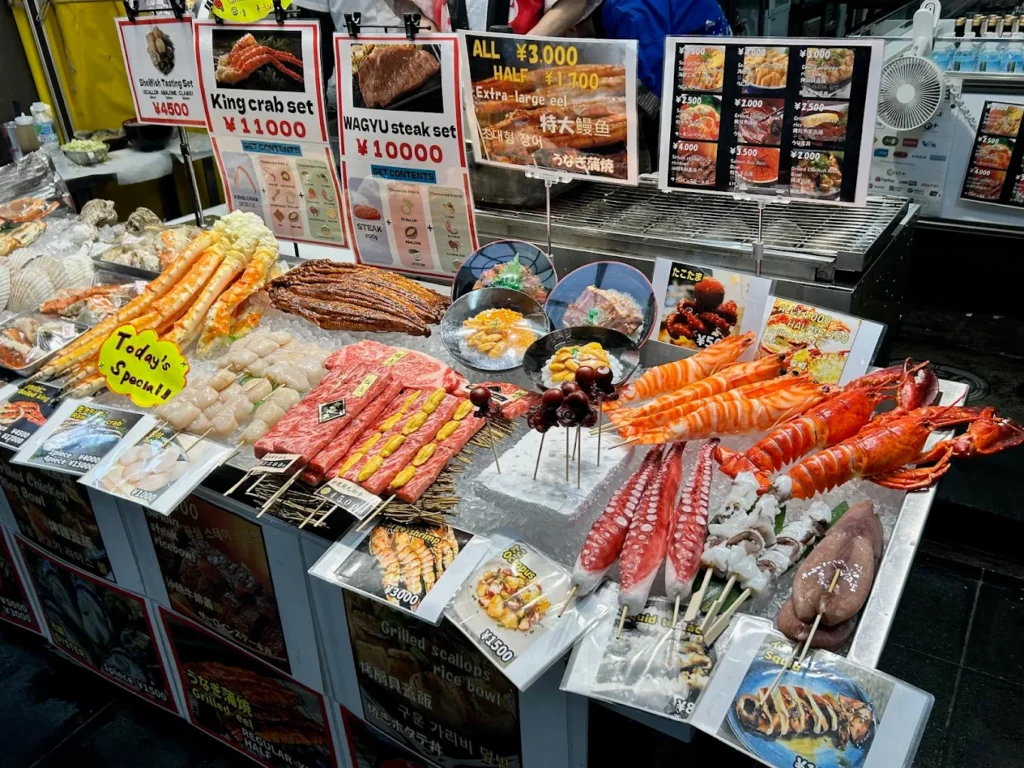
黑门市场 | 大阪美食天堂
Osaka is known as the “City of Food” and boasts a rich culinary culture. If you’re visiting Osaka, you’ll surely want to enjoy some delicious local cuisine. In this article, we’ll introduce Kuromon Market, where you can experience Osaka’s culinary culture through a wide selection of fresh ingredients—including fish, which is essential for Japanese cuisine such as sushi, as well as vegetables and fruits. Index 1. What Is Kuromon Market? 2. Access to Kuromon Market 3. Two Must-Visit Shops at Kuromon Market 4. Tips for Enjoying Kuromon Market Kuromon Market has a history spanning over 200 years. It began as a place for buying and selling fish and has long been a beloved destination for local shoppers. Today, the 580-meter-long arcade is home to about 150 shops, ranging from fresh fish vendors to vegetable and fruit stands, as well as dessert shops. You can enjoy everything from fresh market specialties—such as grilled seafood skewers and fresh juices—to local Osaka dishes like okonomiyaki and takoyaki. Many shops within the market have English signage, making it a great choice even for first-time visitors to Japan. Most shops close around 6:00 PM, so we recommend visiting in the morning or early afternoon. Kuromon Market is located just a 5-minute walk from Nipponbashi Station on the Osaka Metro Sennichimae Line, making it easy to include in your Osaka sightseeing itinerary. It’s also about a 10- to 15-minute walk from the Dotonbori area. The first recommended spot at Kuromon Market is “Kuromon Torepichi Market: Minami-Kuromon Branch(黒門とれぴち市場 南黒門店)”, a restaurant specializing in freshly grilled seafood and steak. They grill luxurious ingredients—such as crab and shrimp, as well as premium Wagyu beef skewers and steaks—to order, so you can enjoy them piping hot right there. It’s great that you can enjoy both seafood and meat. The second recommended spot at Kuromon Market is the tuna specialty shop “Maguroya Kurogin Kuromon Market Main Store(まぐろや 黒銀 黒門市場本店)”. This shop specializes in bluefin tuna, and you can enjoy seasonal tuna selected by expert connoisseurs. The menu features sashimi, nigiri sushi, and rice bowls, but the most popular item is reportedly the “Three-Color Rice Bowl,” which lets you fully savor bluefin tuna by combining three different cuts—otoro, chutoro, and akami. If you’re not sure what to order, definitely go for the Three-Color Rice Bowl! The Kuromon Information Center, located inside Kuromon Market, is a recommended spot for tourists. It features a free rest area and restrooms, and the women’s restroom is equipped with a diaper-changing table. ・While some shops accept credit cards and electronic payment methods, cash is the primary form of payment. ・Eating while walking is prohibited, so please enjoy your food and drinks in the designated areas at the shop where you made your purchase or at the Kuromon Information Center. At Kuromon Market, be sure to enjoy discovering delicious foods and having unique experiences that you can only find at a market.
-

胜尾寺一日游:经济实惠的推荐行程及门票指南
Famous for its “winning daruma”, Katsuo-ji Temple is one of Osaka’s most popular sightseeing spots. The sight of countless bright-red daruma dolls displayed throughout the temple grounds has become a favorite photo spot on social media. In this guide, we’ll introduce “Katsuo-ji Temple & Osaka Metro Pass North Plus 1-Day Set Ticket”, a convenient and affordable way to travel from central Osaka to Katsuo-ji Temple. We’ll also share a recommended day-trip itinerary and explain exactly how much you can save by using the ticket. Index 1. Minoh-Kayano Station Is the Most Convenient Way to Get to Katsuo-ji Temple 2. What Is “Katsuo-ji Temple & Osaka Metro Pass North Plus 1-Day Set Ticket”? 3. How to Purchase the Katsuo-ji Temple & Osaka Metro Pass North Plus 1-Day Set Ticket 4. How to Use the Katsuo-ji Temple & Osaka Metro Pass North Plus 1-Day Set Ticket 5. A Budget-Friendly Day Trip Itinerary Using the Ticket 6. How Much Can You Save with This Katsuo-ji Temple Itinerary? Instead of Hankyu Minoh Station, the more convenient option is Minoh-Kayano Station on the Kita-Osaka Kyuko Line. From Minoh Station, you’ll need to take a taxi to reach Katsuo-ji Temple, while direct buses to Katsuo-ji Temple operate from Minoh-Kayano Station. In this case, Katsuo-ji Temple & Osaka Metro Pass North Plus 1-Day Set Ticket is highly recommended. This ticket combines train travel and admission to Katsuo-ji Temple at a discounted price. It also comes with discount benefits at selected sightseeing spots in Osaka City, making it a great choice for travelers who want to explore more of Osaka in addition to visiting Katsuo-ji Temple. The Katsuo-ji Temple & Osaka Metro Pass North Plus 1-Day Set Ticket includes unlimited rides on all Osaka Metro and Kita-Osaka Kyuko Line trains, as well as admission to Katsuo-ji Temple. The ticket costs ¥1,800 for adults. Simply showing the ticket also gives you access to discount benefits at participating sightseeing attractions in Osaka City. ▶ Purchase here This is a web-only digital ticket that can be purchased and used entirely on your smartphone. It is not available at station ticket counters or ticket machines, so be sure to purchase it in advance through the dedicated website. There is no need to specify a date when purchasing. The ticket is valid for three months from the date of purchase, making it convenient to prepare ahead of your trip. On the day of your trip, you can travel conveniently with just your smartphone—no physical ticket is required. When entering or exiting the train station, simply display the QR code on your smartphone and hold it over the designated reader. Since the Katsuo-ji Temple admission fee is already included, you can enter the temple without having to purchase an admission ticket on-site. Note: The fare for the Hankyu Bus from Minoh-Kayano Station to Katsuo-ji Temple is not included in this ticket. From major areas such as Umeda, Namba, and Tennoji, you can travel directly on the Osaka Metro Midosuji Line. This is a recommended itinerary for those who want to visit Katsuo-ji Temple in the morning and explore Osaka City in the afternoon. Start your day in Namba and make your way to Minoh and Katsuo-ji Temple. After exploring the temple, return to central Osaka and spend the afternoon sightseeing at Osaka Castle and shopping in Umeda, before heading back to Namba to finish your day. 【Morning】Visit Katsuo-ji Temple Osaka Metro Midosuji Line Namba Station ↓ No transfer required—continue directly onto the Kita-Osaka Kyuko Line Minoh-Kayano Station (transfer to a bus) ↓ Katsuo-ji Temple Plan to spend approximately 1–2 hours at Katsuo-ji Temple. If you leave Namba after breakfast, you should be able to finish your visit in the morning. However, please note that the temple has designated opening hours, so be careful not to arrive too early. ・Weekdays, Sundays & public holidays: 8:00–17:00 (Last admission: 16:30) ・Saturdays: 8:00–18:00 (Last admission: 17:30) ▶ For detailed access information from Minoh-Kayano Station to Katsuo-ji Temple, click here ▶ For more information on the highlights of Katsuo-ji Temple, click here 【Afternoon】Explore Osaka City ① Osaka Castle Park & Osaka Castle Katsuo-ji Temple ↓ Take the bus Kita-Osaka Kyuko Minoh-Kayano Station ↓ Osaka Metro Midosuji Line Umeda Station ↓ Walk to transfer Osaka Metro Tanimachi Line Higashi-Umeda Station ↓ Osaka Metro Tanimachi Line Tanimachi 4-chome Station Allow approximately 1–1.5 hours to explore Osaka Castle. Enjoy the seasonal scenery in the park surrounding the castle, then head to the top floor of the castle tower for panoramic views of Osaka City. ② Enjoy Food & Shopping in Osaka Umeda Osaka Metro Tanimachi Line Tanimachi 4-chome Station ↓ Osaka Metro Tanimachi Line Higashi-Umeda Station Umeda is best visited in the late afternoon or evening, when you can combine sightseeing with dinner. At the popular Umeda Sky Building Kuchu Teien Observatory, you can enjoy stunning city views, including beautiful sunsets and dazzling nighttime scenery. ▼ For more information about the Umeda Sky Building Kuchu Teien Observatory, see this article: A Guide to Umeda Sky Building: View Spot, Tickets, Access and More ▼ Check out our guide to the best food in Osaka Umeda: [2026] Best 11 Food in Osaka Umeda: From the Newest Restaurants to Classic Japanese Cuisine ▼ For shopping, Hanshin Umeda Main Store is highly recommended: Hanshin Umeda Main Store: A Foodie Paradise with Tax-Free Shopping and Exclusive Finds ▼ Umeda is also lively at night! Discover more things to do here: 7 Osaka Umeda Night Activities. Enjoy the night in the city with bars, cafes and night views! Osaka Metro Midosuji Line Umeda Station ↓ Osaka Metro Midosuji Line Namba Station Finally, return to Namba and consider ending your day with a spectacular sumo show at THE SUMO HALL HIRAKUZA OSAKA. ▼ Learn more about THE SUMO HALL HIRAKUZA OSAKA here: THE SUMO HALL HIRAKUZA OSAKA❘ Sumo Entertainment Show in Namba, Osaka We compared the total cost of this itinerary using the ¥1,800 1-Day Pass with the cost of paying for each train fare and admission fee separately. Total when paying regular fares and admission fees individually: ¥6,840 ・Total train fares: ¥1,540 ・Bus to/from Katsuo-ji Temple: ¥1,600 ・Admission fees: Katsuo-ji Temple ¥500 / Osaka Castle ¥1,200 / Kuchu Teien Observatory ¥2,000 Total when using the 1-Day Pass & discount benefits: ¥6,280 ・1-Day Pass: ¥1,800 ・Bus to/from Katsuo-ji Temple: ¥1,600 ・Admission fees: Katsuo-ji Temple (included in the 1-Day Pass) / Osaka Castle: ¥1,080 (discounted) / Kuchu Teien Observatory: ¥1,800 (discounted) That means you can save ¥560 compared with paying separately! Plus, you can enjoy a more convenient trip without having to purchase individual train tickets along the way—a win-win! The Katsuo-ji Temple & Osaka Metro Pass North Plus 1-Day Set Ticket lets you enjoy both a visit to Katsuo-ji Temple and sightseeing around Osaka City conveniently and at a great value. Make the most of this ticket and enjoy a fun-filled day exploring Osaka!
-

大阪箕箕面一日游|享受大阪最美的自然风光!箕面瀑布、胜尾寺徒步
-

【大阪】一日游路线|大阪的旅游名胜和最新的热门景点荟萃!
-

【大阪梅田】一日游行程|观光・购物・美食!尽情享受大阪梅田
-

梅田~宝冢-1日游|下雨天也可以和孩子一起游玩的推荐景点!