KYOTO
Kyoto lets you experience the “spirit of Japan.” Dress in a traditional kimono while you explore the city’s ancient temples and shrines and taste the renowned, high quality Japanese-style cuisine.

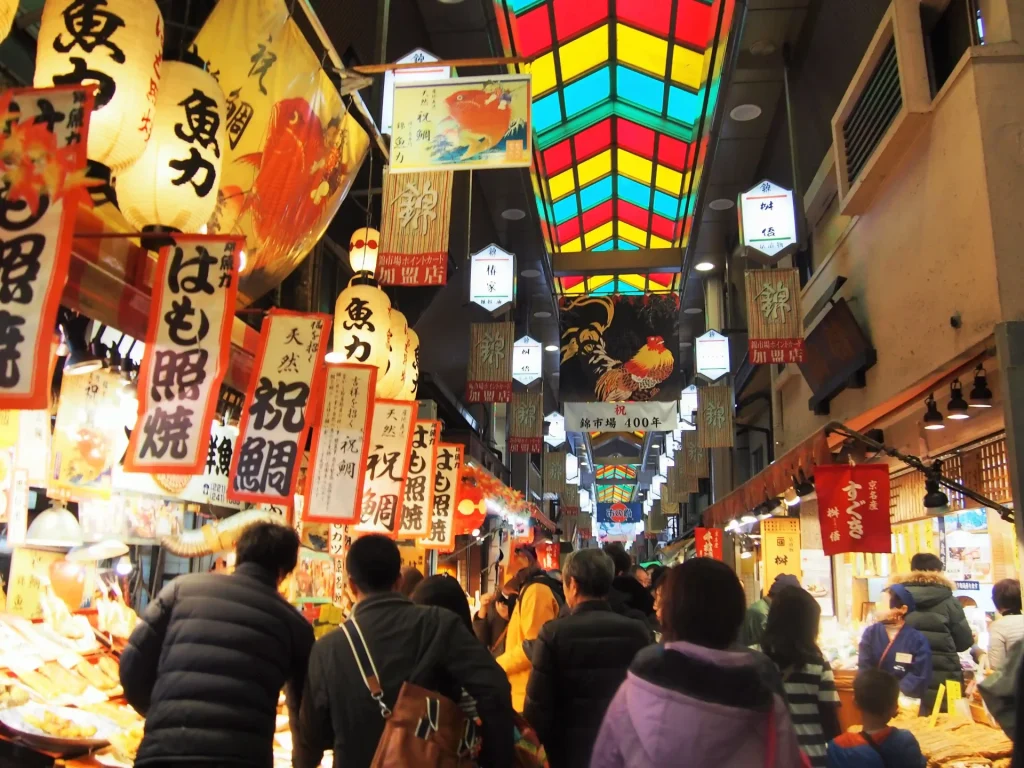


RELATED ARTICLES
-

〈2026〉Best 15 Places to See Autumn Leaves in Japan (Kyoto, Osaka and More)!
Japan in autumn colors. Here are some of the best places in Kansai to see the autumn leaves, by area, from once-in-a-lifetime viewing spots to hidden gems. Please refer to the fall tourism in 2026. -INDEX- Things to keep in mind when visiting temples and shrines in Japan 【KYOTO】 〇Higashiyama Area Famous place:Eikando(Zenrin-ji) Little known good spot:Anrakuji 〇Arashiyama Area Famous place:Daikaku-ji Temple Famous place:Jojakko-ji Little known good spot:Jizoin(Takedera/Bamboo Temple) 〇Other Area Famous place:Rurikoin Little known good spot:Komyo-ji 【OSAKA】 Famous place:Minoh Waterfall Little known good spot:Katsuo-ji 【KOBE】 Famous place:Sorakuen Garden Famous place:Kobe Municipal Arboretum Little known good spot:Rokko Alpine Botanical Garden Little known good spot:Rokko-Arima Ropeway 【Other Area】 Himeji:KOKO-EN Nara:Hasedera temple FAQs About Fall Foliage in Osaka, Kyoto, and Kobe When visiting temples and shrines, be sure to observe proper etiquette and manners. Here are some guidelines that apply to both temples and shrines. 1. Do not speak loudly. Temples and shrines are sacred places, so please enjoy them quietly. 2. Do not eat or drink on the grounds. This is strictly prohibited. Even outdoors, it may be considered a breach of etiquette, so please be careful. 3. Do not touch buildings, torii gates, or statues. Leaning on torii gates or touching Buddhist statues is strictly prohibited. Treat these sacred objects with respect. 4. Confirm photography rules. Photography is prohibited in many areas, so check signs and notices before taking photos. 5. Do not walk in the middle of the approach. The middle of the approach is the path for the gods, so walk on the side. In addition, the methods of worship differ between temples and shrines. At shrines, it is common to worship with two bows, two claps, and one bow, but at temples, clapping is not done. Observe etiquette and manners, and enjoy visiting temples and shrines. 🍁Usual viewing time: mid-November to late November Eikando is the best place in Higashiyama to view the autumn leaves. About 3,000 maple trees cover the entire precincts of the temple. The sight of the tallest pagoda, Dabotou, enveloped by the autumn leaves is a fantastic sight. Japanese maples are planted around the Housho Pond, and the reflection of the Japanese maples and the Gokuraku Bridge in the water is a must-see. 🍁Usual viewing time: mid-November to late November Normally closed to the public, this special temple is open to the public only during the cherry blossom and autumn foliage seasons. Within walking distance is the Philosopher’s Path, which is tinted in autumn, so a walk along this path is recommended. Highlights include the scattered autumn leaves that turn the stone steps of the temple gate bright red and the beautiful garden with Nyoigatake in the background. Scheduled Special Opening Dates: November 1 (Sun), 2 (Mon), 3 (Tue), 7 (Sat), 8 (Sun), 14 (Sat), 15 (Sun), and 21 (Sat) through December 6 (Sun), 2026 *Gates open at 12:00 PM on Sunday, the 8th ▼Check this article▼ 【Kyoto】1 Day Trip|Let’s walk around Higashiyama, Kyoto to see the autumn leaves! 🍁Usual viewing time: Mid-November to late November The combination of the beautiful colors of the pagoda and the fiery maple leaves is gorgeous. Osawa Pond to the east is also a popular spot for viewing autumn leaves. The reflection of the autumn scenery on the surface of the water is fantastic. ▼Food info of Arashiyama area▼ Kyoto Arashiyama Sightseeing Half-day Model Course! Capture the bamboo forest, temples, nature, and major spots! 9 Sweets in Arashiyama, Kyoto, from Easy Eats to Stylish Cafes 🍁Usual viewing time: Mid-November to late November This temple is located on Mt. Ogura, known for the Ogura Hyakunin Isshitsu. In autumn, the approach from the entrance gate to the Niomon Gate is covered in autumn leaves, creating a tunnel of foliage. The autumn leaves surrounding the 12-meter tall Dabotou (pagoda), which is located at the top of the stone steps, is a must-see. The precincts of the temple and the area around the pagoda also offer a panoramic view of Kyoto City. 🍁Usual viewing time: late November Jizoin (Takedera/Bamboo Temple) is a Zen temple with beautiful bamboo groves, as its name suggests, and is a well-known spot for autumn leaves among those in the know. The trees change color later than other places in Kyoto, and the autumn leaves can be enjoyed until mid-December. Surrounded by lush bamboo groves, the contrast between the green of the bamboo and the changing colors of the autumn leaves is magnificent. The heart-shaped window, Inome-mado, in the Hojo is also open to the public. The autumn leaves cut by the window are breathtakingly beautiful. 🍁Usual viewing time: mid-November to late November Ruriko-in Temple is a popular spot in Rakuhoku Yase, and the spectacular view of the autumn leaves reflecting on the lacquered desk on the second floor is a sight to behold. Anyone can take pictures of this spectacular view by holding up a camera at the desk. It will be released in spring, summer, and autumn. Please enjoy the wide-open view of the autumn leaves as they spread across your field of vision. Special viewing period: October 1, 2026 (Thu) – December 13, 2026 (Sun) *From Saturday, November 13 to December 6, advance reservations will be accepted by lottery. Please check the official website for details. 🍁Usual viewing time: Mid-November to early December Sohonzan Komyoji Temple is located at the foot of Nishiyama in Nagaokakyo City. Visitors can see the rich expression of nature in each of the four seasons. Every year from mid-November to early December, a special entrance to the temple is held for the autumn foliage. The maple approach to the temple, with its impressive lineup of about 250 old maple trees, is a superb photo spot. Nishiyama is one of Kyoto’s best but not well-known sightseeing spots. If you want to enjoy Kyoto without the crowds, or if you want to visit a spot that is not yet known, check out the article below. Special Access Period: November 14, 2026– December 6, 2026 ▼Check this article▼ Kyoto Nishiyama|An undiscovered sightseeing spot in Kyoto! 🍁Usual viewing time: mid-November to early December Minoh Great Falls is one of the best places in Osaka to view the autumn leaves. The contrast between the waterfall and the autumn leaves in the vast Minoh Park is spectacular. You can enjoy the autumn leaves everywhere along the 2.6 km route from Hankyu Minoh Station to the falls. If you come to Minoh, you must try the famous “Momiji no Tempura” (maple leaf tempura). It is a slightly sweet and crunchy snack made by carefully frying real maple leaves one by one. You can buy it at a store on Takimichi. ▼Check this article▼ Minoh, Osaka-1 Day Trip|Enjoy The Most Beautiful Nature in Osaka! Hiking at Minoh Waterfalls and Katsuo-ji Temple Note on how to get to Minoh Waterfall! Points that international travelers should know before going there 🍁Usual viewing time: mid-November to early December Known since ancient times as a temple of good fortune, the precincts of Minoh’s Katsuo-ji Temple are decorated with brilliant autumn leaves in November. The tunnel of autumn leaves covering the approach to the temple is especially spectacular. The contrast between the green mountains in the background and the autumn leaves is like a painting. Katsuo-ji Temple is also known as the temple of “Kachi-Dharma”. Small Dharma dolls are laid everywhere, including on the stairs and stone walls. Please enjoy the adorable Dharma and beautiful nature. ▼Check this article▼ What is the highlight of Katsuo-ji in Minoh? A temple of luck to win in Osaka sightseeing ▼Check out this article for directions to Katsuo-ji Temple▼ [Train & Bus Guide] How to Get to Katsuo-ji Temple in Osaka? Key Travel Tips for International Visitors 🍁Usual viewing time: mid-November to early December Sorakuen Garden is the only Japanese garden in Kobe City’s urban parks. It is a kaiyu-style garden with a pond, with stepping stones and stone bridges across which visitors can view streams and waterfalls. The garden is famous for azaleas in spring, and in autumn the garden is decorated with autumn leaves. Important cultural properties such as the boathouse and the former Hassam residence, which were relocated for preservation, are also highlights. Why not enjoy an authentic Japanese garden and fall foliage viewing in the city of Kobe? ▼Check this article▼ 10 Delicious Gourmet Foods in Kobe! Local Specialties and Local Foods Recommended by Locals 🍁Usual viewing time: late October – early November The park is divided into different regions of the world, such as North America and Europe, and different types of trees, so that visitors can learn about the diverse beauty of autumn leaves. The area around Hase Pond is a particularly beautiful spot for viewing the autumn colors in a water mirror. Let’s take a stroll through the vast park and enjoy the world tour of autumn leaves! ▼Sightseeing and food info of Kobe▼ 10 Delicious Gourmet Foods in Kobe! Local Specialties and Local Foods Recommended by Locals First Time in Kobe. 21 Best Things to Do! Sightseeing, Spots, Dining, Model Course 🍁Usual viewing time: late October – early November Located at an altitude of 865 meters, the Rokko Alpine Botanical Garden reaches its autumn foliage season earlier than the city. Trees like maples and beeches typically begin to change color from mid-October, with the peak season lasting until mid-November. Taking advantage of the climate, which is similar to southern Hokkaido, the garden cultivates alpine plants, allowing visitors to enjoy the autumn colors of a wide variety of rare plants. During KOBE ROKKO MEETS ART 2026 beyond, from Saturday, September 19 to November 29, 2026, light artworks and illuminated autumn leaves will be on display on Saturdays, Sundays, and holidays! ▼KOBE ROKKO MEETS ART 2026 beyond Information▼ KOBE ROKKO MEETS ART 2026 beyond |Review and Sample Itineraries 🍁Usual viewing time: late October – early November The Rokko-Arima Ropeway connects the top of Mt. Rokko and Arima Onsen in about 12 minutes. Visitors can enjoy the changing autumn leaves depending on the elevation. The view of the autumn foliage from the gondola’s large foot-high windows is spectacular. Don’t forget to visit Rokko Mountain, where “KOBE ROKKO MEETS ART 2026 beyond” will be held from August 29 to November 29, 2026, and Arima Onsen to enjoy art, hot springs, and gourmet food! ▼Check this article▼ Arima Onsen-1 Day Trip|Enjoy Hot Springs, Gourmet, and Nature! The 10 best food and sweets in Arima Onsen Town 🍁Usual viewing time: mid-November to late November There are nine gardens of different styles with Himeji Castle, which is registered as a World Heritage site, in the background. Because of the atmosphere of the Edo period, the gardens are often used for filming movies and TV dramas. In the fall, the Autumn Foliage Festival is held from November 17 to December 6, 2026. The best time to visit is during the “Momiji-kai” (autumn foliage viewing), when the leaves are illuminated for a fantastic view. You can enjoy a fantastic view that is different from that of daytime. During this period, the park is open until 20:00.(Last admission is at 19:30) 🍁Usual viewing time: late November – mid December Hasedera Temple, located in Sakurai City, Nara Prefecture, is known as the “Temple of Flowers”. The temple is open twice a year, in spring and fall, for a limited time for special visits. A must-see spot is the floor of the hall of worship. In autumn, visitors can enjoy the “Yuka-momiji” (floor maple leaves) that turn bright red. The view of the autumn leaves from the stage in front of the main hall is not to be missed. The five-story pagoda surrounded by autumn leaves is a magnificent sight. Be sure to visit Hasedera Temple, where the entire mountain is decorated with autumn leaves. Special Viewing: October 5, 2026 (Sat) – December 8, 2026 (Sun) (Separate admission fee of 1,000 yen) Q. When is the best time to see the fall foliage in 2026? A. As of September 4, the forecast is for conditions similar to the average year. In the lowlands, the peak viewing period is expected to be from late November through mid-December, while in the mountainous areas, it is expected to be from early November through early December. Autumn in Japan is very vivid. The temperature has dropped, making it comfortable to be out. There are so many places to see the autumn leaves that it is impossible to visit them all at once. Please find your favorite spot and enjoy the autumn foliage as you wish.
-
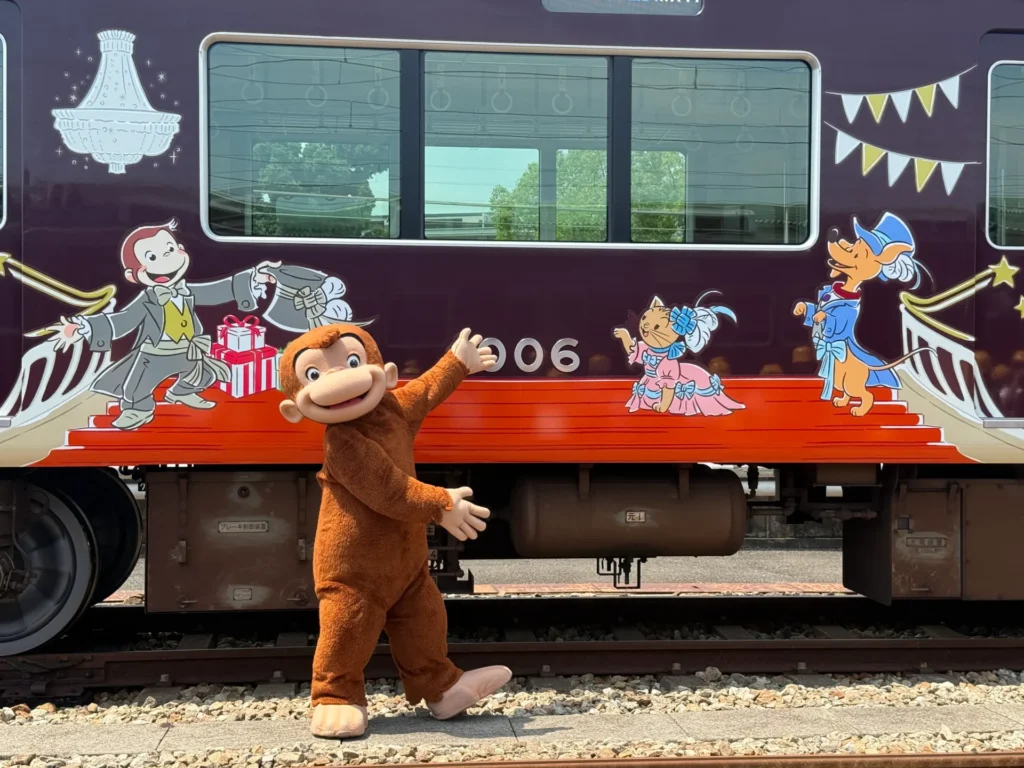
Curious George × HANKYU Collaboration: Ride the Special Train, Shop Exclusive Goods, and Enjoy Limited-Edition Food
To celebrate the 85th anniversary of Curious George in 2026, the beloved little monkey is teaming up with HANKYU for a special collaboration! From a Curious George-themed wrapped train to exclusive merchandise and limited-edition food and drinks, there’s plenty to enjoy throughout the campaign. If you’re visiting Osaka, Kyoto, or Kobe during the event period, don’t miss this adorable collaboration! Index 1. Ride the Curious George Train through Osaka, Kyoto, and Kobe 2. Exclusive merchandise featuring George in HANKYU’s signature maroon railway uniform 3. Cute and delicious! Curious George × HANKYU collaboration food & drinks 4. George pops up at Hankyu Sanbangai, NU Chayamachi, and more, plus a joint stamp rally The Curious George × HANKYU collaboration runs from July 31, 2026 (Fri.) to February 17, 2027 (Wed.). The highlight of the campaign is undoubtedly the Curious George Train. One train on each of HANKYU’s three main lines—the Kobe Line (Osaka-umeda ↔ Kobe-sannomiya), Kyoto Line (Osaka-umeda ↔ Kyoto-kawaramachi), and Takarazuka Line (Osaka-umeda ↔ Takarazuka)—has been completely transformed with Curious George-themed decorations. Each train features an exclusive exterior design inspired by landmarks along its route. You may spot familiar sights such as Kobe Port Tower and the zoo on the Kobe Line, the Takarazuka Grand Theater and Minoh Falls on the Takarazuka Line, or torii gates and matcha motifs on the Kyoto Line. The Curious George Train also carries a special commemorative headmark, while a Curious George plush dressed in HANKYU’s signature maroon railway uniform accompanies the train from the crew’s cabin. Inside the train, every corner is filled with the world of Curious George. Be sure to look for the themed stickers on the doors and windows—each railway line has its own exclusive designs. Even the hand straps and hanging advertisements have been transformed into Curious George decorations! A wide range of exclusive collaboration merchandise is also available, including plush toys, lunch tote bags, acrylic cups, pin badges, and more, all featuring George dressed in HANKYU’s iconic maroon railway uniform. The collection includes 24 charming items you’ll want to use every day. ■Release Date: From August 26 (release dates vary by retailer) Available at: Selected Lawson stores along the Hankyu Hanshin railway network, Color Field cosmetic and lifestyle stores (all locations), Cleduple, selected Kiddy Land stores, and other participating retailers. *Please note that all merchandise is available while supplies last. The Curious George × HANKYU collection, along with other official HANKYU railway merchandise, is also available through the HANKYU DENSHA SHOP online store. Looking for a unique souvenir? From August 4 to November 9, 2026, limited-edition collaboration food items will be available at shops located inside and around HANKYU stations. *Please note that sales periods vary by store. At Freds Cafe (located at Osaka-umeda Station, Nishinomiya-kitaguchi Station, and other locations), you’ll find two specially packaged flavored teas: Tropical Fruit and Chocolate Banana. At A la Campagne, available at stations including Nishinomiya-kitaguchi, the collaboration features a banana-flavored madeleine created especially for the event. Meanwhile, Tully’s Coffee stores at Osaka-umeda Station, Nishinomiya-kitaguchi Station, and other locations are serving fluffy baked cakes printed with an adorable image of George. They’re topped with banana jam—George’s favorite—and whipped cream drizzled with chocolate sauce. You’ll also find Curious George × HANKYU original-label bottled drinks in vending machines at Osaka-umeda Station, Nishinomiya-Kitaguchi Station, and other stations. The labels can be carefully peeled off and used as stickers, making them a fun keepsake. There are 13 different label designs, so you’ll never know which one you’ll get! ▶ Click here for collaboration food sales shops and periods. Starting August 18, 2026, participating commercial facilities—including Hankyu Sanbangai, NU Chayamachi, NU Chayamachi Plus, Grand Front Osaka Shops & Restaurants, and Hankyu Nishinomiya Gardens—will host a series of special events under the theme “Let’s Go! George’s Exciting Adventure Team.” *Event dates vary by venue. At Hankyu Sanbangai, visitors can enjoy themed photo spots. In addition, customers who spend ¥1,000 (tax included) or more at participating UMEDA FOOD HALL restaurants will receive either an original coaster or an original placemat, depending on the campaign period. ▶ For details of commercial facilities check here Visitors can also join a joint stamp rally by collecting stamps at all six stamp locations across Hankyu Sanbangai, NU Chayamachi, and NU Chayamachi Plus. Complete the rally to receive an exclusive original clear file. ▶ For details of the Hankyu Sanbangai × NU Chayamachi Joint Stamp Rally check here Step into the delightful world of Curious George through themed trains, exclusive food, special events, and unique shopping experiences. © & ® UCS LLC and HC LLC ©Hankyu Corp.
-
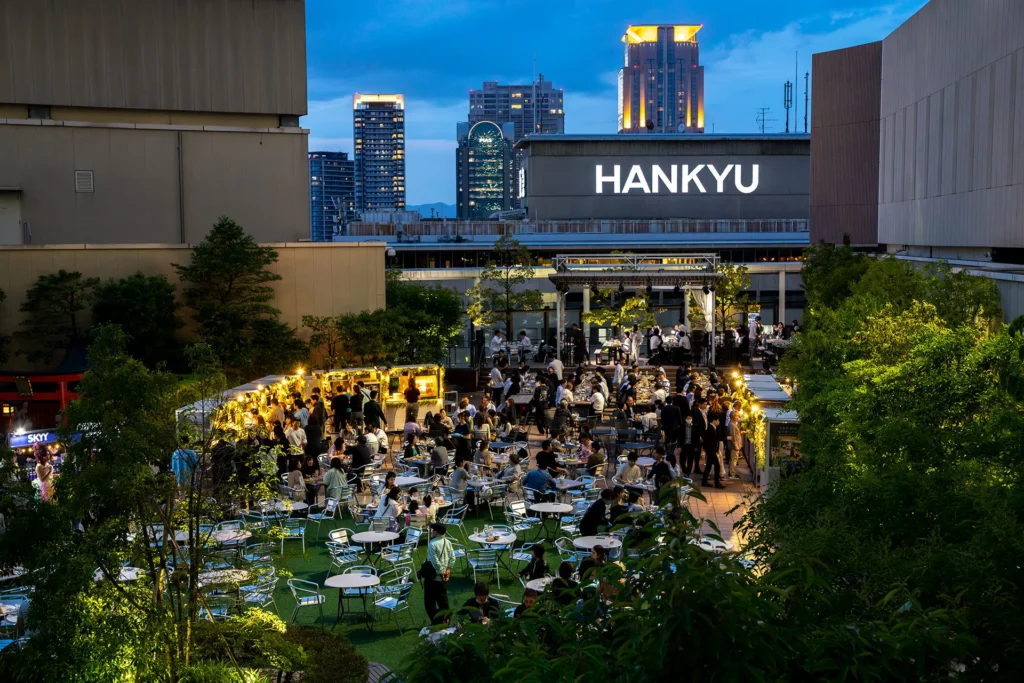
7 recommended Beer Gardens in Kyoto, Kobe and Osaka
Japan may not see eating and drinking outdoors as common sense, but a special event held limitedly in summer called BEER GARDEN is very popular among Japanese. Let’s go see and experience this unique beer garden culture and enjoy the relaxing atmosphere when visiting Japan! *Picture is for illustration purposes only. -INDEX- 【Kyoto】Hyssop Nature Beer Terrace(In GOOD NATURE STATION) 【Kyoto】Mar Cafe 【Osaka】BEER GARDEN ROOFTOP | Hotel New Hankyu Osaka 【Osaka】Umeda Hankyu Beer Garden 【Osaka】GRAND FRONT OSAKA「Otona no Beer Garden」 【Kobe】TOOTH TOOTH MART FOOD HALL&NIGHT FES「UMI NO BEER GARDEN 2026」 【Kobe】THE KOBE CRUISE Concerto「Beer Garden Cruise」 Enjoy the summer tradition at a Japanese-style beer garden! Period: Until September 30, 2026 (Wed) Hyssop is located in GOOD NATURE STATION, a facility that is full of healthy eating-themed restaurants. You can forget about the hustle and bustle of the city and relax on the comfortable terrace seats with an atrium filled with greenery. The summer “Nature Beer Terrace Plan” is designed around the theme of “a slightly indulgent beer terrace experience right in the heart of the city,” allowing you to fully enjoy not only beer but also our carefully curated meals. Includes 90 minutes of all-you-can-drink draft beer, beer cocktails, wine, and soft drinks. Price/ 5,500 per person Opening Hours/ 17:30~21:00 (Last entry at 20:00) *Seat is booked for 2 hours; all-you-can-drink plan for 90 minutes *Possible to be seated indoors due to weather condition *Reservations must be made by 5:00 PM the day before; reservations are available for groups of two or more. Period: Until September 30, 2026 (Wed) Mar Cafe offers a BBQ-style beer garden overlooking Higashiyama area, located on the 8th floor of the building near Kiyomizu-dera Temple. Although it is close to the main sightseeing spots in Kyoto, Mar Cafe gives you a comparatively quiet and calm atmosphere. The menu features all-you-can-eat special house-made curry and four types of meat (beef, pork, chicken, and lamb) marinated in our homemade sauce, plus all-you-can-drink beverages! Price/ 5,500 per person Opening Hours/ 11:30~23:00 *Seat is booked for 2 hours; all-you-can-drink plan for 90 minutes *Reservation is required by the day before dining (Price at 6,600 without reservation) *Available on rainy days (with tent), but maybe seated indoors due to typhoon or storm Period: Until September 12(Sat), 2026 Directly connected to Hankyu Osaka Umeda Station! A long-time favorite in Umeda, this beer garden offers unlimited food and drinks with no time limit. The food is all-you-can-eat, and there are over 70 types of drinks included in the all-you-can-drink plan. With 8 brands from 3 different breweries available, why not try comparing beers from Japan’s famous Suntory, Kirin, and Asahi?From Sunday through Tuesday, you can enjoy all-you-can-drink service on two types of craft beer. Price/ Monday–Thursday and Sunday: 5,800 yen; Friday and Saturday, July 19, and August 9: 6,000 yen Opening Hours/ 17:30~21:00 *No limited time *Possible without reservations (may not be available for private events or depending on availability) *Possible to be canceled due to weather condition *You cannot access the rooftop except via the dedicated elevator on the first floor. Period: Until October 12(Mon), 2026 Located in the biggest department store in western Japan, Umeda Hankyu Beer Garden is the best place to go after shopping. The 2026 Umeda Hankyu Beer Garden is themed “A Rooftop Beer Garden Journey Through Flavors,” where you can enjoy “three journeys” with limited-time themes that take you to Asia, the Americas, and Europe. The beer garden at the Hankyu Umeda Main Store is popular for its stylish atmosphere! It also boasts an overwhelming variety of drinks, with an all-you-can-drink selection of 120 different types! The all-you-can-drink lineup includes two of Asahi’s flagship beers, as well as a wide range of highballs, non-alcoholic beverages, and low-alcohol options. The food menu features an all-you-can-eat selection of about 30 items, including deli dishes, salads, curry, and pizza! Price/ 4,800~ (depends on the menu plan) Opening Hours/ Monday ~ Friday: 17:00~22:30 (Weekends, Holidays, August 10~18th: 16:00~ *Last entry at 20:30) *Seat is booked for 2 hours; all-you-can-drink plan for 90 minutes *Possible without reservations (may not be available depending on availability) *Possible to be canceled due to weather condition ▼Check this article▼ For Visitors to Japan. Highlights of the Hankyu Department Store Umeda Main Store! Period: Until September 30(Mon), 2026 If you are looking for a beer garden where it is less crowded and more calm, we recommend 「Otona no Beer Garden」in Grand Front Osaka. The venue is the rooftop garden of the Grand Front Osaka South Building. The terrace surrounded by greenery is like an oasis in the city where you can forget the hustle and bustle. Space between tables is wide enough for you to relax while enjoying beer or cocktails. The beer garden package includes an all-you-can-drink selection of approximately 40 beverages, including draft beer, along with a set of food items that pair well with drinks, such as grilled chicken, grilled pork shoulder, grilled vegetables, and French fries. À la carte dishes are also available for separate ordering. Price/ 6,800 per person (Depends on the plan) Opening Hours/ 17:30~22:00 (Last entry at 20:30 and last order for drinks at 21:30) *Seat is booked for 2 hours; all-you-can-drink plan for 90 minutes *Possible without reservations (may not be available depending on availability) *Possible to be canceled due to weather condition ▼Check this article▼ A Guide to GRAND FRONT OSAKA SHOPS&RESTAURANTS: Access, Must-Try Food & Recommended Shops Period: Until October 31(Sat), 2026 TOOTH TOOTH MART FOOD HALL, Kobe’s biggest food hall, is close to the famous Kobe Meriken Park. The biggest draw is the two different styles to suit your occasion. On the terrace, you can enjoy a barbecue in a prime location where you can feel the sea breeze while taking in views of the Kobe Port Tower, the setting sun, and the gradations of color in the sky. Inside, the spacious dining area lets you relax and enjoy the beer garden while gazing at the massive tanks of the theater-style aquarium, átoa. The Terrace BBQ Plan features all-you-can-eat meat selections such as jerk chicken, San-gen pork, and smoked sausages. Plus, you get all-you-can-drink access to about 50 types of beverages. The plan includes a 1,000-yen meal voucher redeemable at the Food Hall, so you can order additional dishes of your choice. There’s also a special plan that includes Hyogo Prefecture-produced sirloin. The food hall features a selection of foods unique to Kobe—such as Kobe pork, Rokko Beer, and Nada sake—so you can fully enjoy everything Kobe has to offer! Price/ 5,500 with all-you-can-drink plan; 3,500 for food only plan Opening Hours/ 11:00~22:00 (Last entry at 20:00) *Seat is booked for 2 hours *Reservation is required *Terrace seats are not available during rainy day ▼Check this article▼ First Time in Kobe. 21 Best Things to Do! Sightseeing, Spots, Dining, Model Course Period: Until September 30(Mon), 2026 THE KOBE CRUISE Concerto, just as the name says, is a beer garden cruise where you can enjoy a cruise tour while having delicious food and fresh beer. A beer garden cruise where you can enjoy a meal will be held. Cruises are available during lunch, twilight, and night hours (schedules vary by day of the week). From the 74-meter-long ship, you can enjoy beautiful views of Kobe, including the setting sun and the city’s sparkling nightscape. This is a special experience unique to Kobe that you can’t find in Osaka or Kyoto. Price/ Beer Garden on Board: 5,280 yen per person (all-you-can-eat beer-themed cuisine + all-you-can-drink + boarding fee); Summer Buffet: 8,800 yen per person (buffet + all-you-can-drink + boarding fee) Opening Hours/ Beer Garden on Board: Weekdays (Mon–Thu + Sunday evenings) Twilight Cruise 5:00 PM–6:45 PM, Night Cruise 7:15 PM–9:00 PM; Summer Buffet: Lunch Cruise 12:30 PM–2:15 PM (Sat, Sun, holidays + select dates), Twilight Cruise 5:00 PM–6:45 PM, Night Cruise 7:15 PM–9:00 PM (Fri–Sat and select dates) *Reservation is required (+81 50-5050-0962<10:00〜19:00>) *Possible to be canceled due to weather condition *This service may not be available depending on special flights or seat availability. Beer Garden is usually an outdoor space to enjoy alcohol, mainly beer, together with finger foods. In Japan, it has been held as a summer limited event on the rooftops of large department stores and commercial facilities in the city. Among an open space decorated with beautiful LED string lights, imagine how relaxing it is to have some fresh beer and flavorful nibbles with close friends or coworkers after a whole day’ s work. Come and enjoy the entertaining beer garden culture in Japan!
-
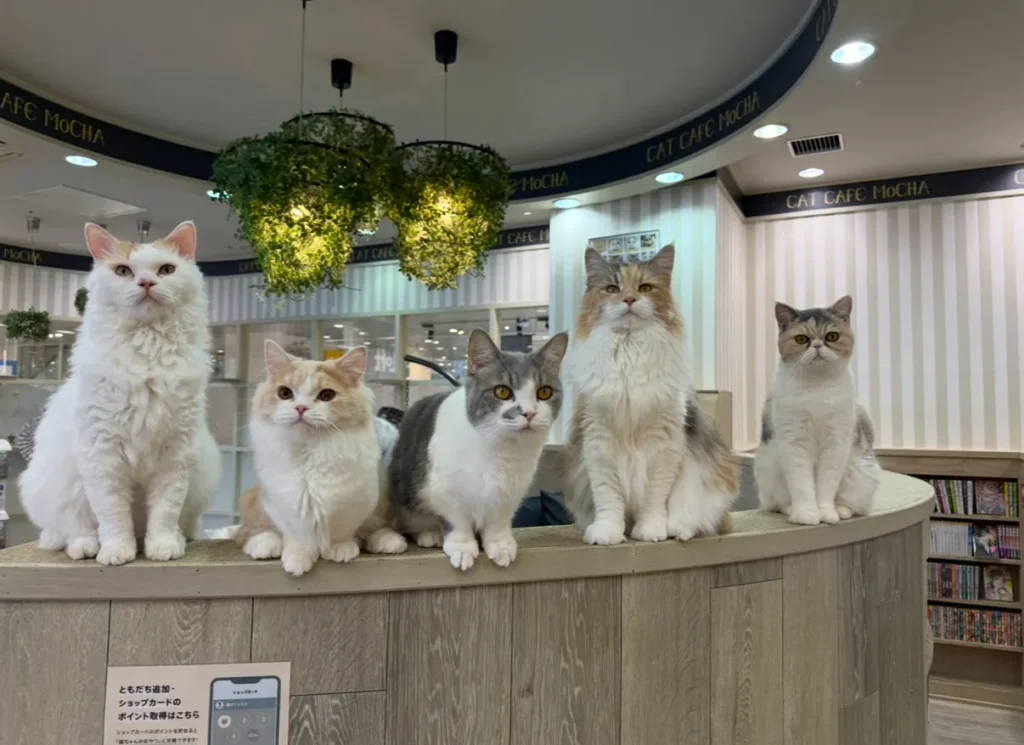
9 Recommended Animal Cafés in Osaka and Kyoto!
From dogs and cats to otters, owls, and even reptiles-get up close and personal with all kinds of adorable creatures at these animal cafés in Osaka and Kyoto. A heartwarming experience with animals is guaranteed to lift your spirits. Index [Kyoto] Don’t Miss Feeding Time Twice Daily at “Cat Cafe MOCHA Kyoto Kawaramachi” [Kyoto] Experience Japanese Culture with Shiba Inu at “Kyoto Mameshiba CAFE” [Kyoto] Relax with Cute Otters at “LOUTRE Kyoto” [Kyoto] Home to 40 Cats! One of Kyoto’s Largest Cat Cafés “Cat & Animal Cafe Noah’s Ark Gion” [Osaka] A Relaxing Café Surrounded by Fluffy Samoyeds: Samoyed Café moffu [Osaka] Meet Samoyed and Capybaras at Japan’s Largest Animal Interaction Facility-“Animeal” [Osaka] Be Healed by Fluffy, Snow-White Samoyeds at “Dog Cafe samo” [Osaka] Unlimited 2-Hour Playtime with Rabbits & Hedgehogs at “Small Animal Cafe ROCK STAR” [Osaka] Japan’s First Micro Pig Café “mipig cafe” [Osaka] A Cat Café That Supports Rescue Cats “CAFE URIEL” Quick Overview Animals Age Accepted Closed Opening Hours Price Reservation Cat Cafe MOCHA Kyoto Kawaramachi Cats 6 and over 1/1 11:00 ~ 21:00 *Last entry 20:30 1st 30 min: Weekdays: ¥1,200 Weekends & Holidays: ¥1,400 Max Daily Fee: Weekdays:¥3,520 Weekends & Holidays: ¥3,850 × Kyoto Mameshiba CAFE Dogs (Mameshiba) 8 and over None 11:30~18:30 *Weekends starts from 11:00 *Last entry 18:00 ・Ages 13 and over: ¥1,300 ・Ages 8-12: ¥1,000 × LOUTRE Kyoto Otters Senior high and over Irregular 13:00~19:00 *Last entry 18:00 50 min ¥3,000 × Cat & Animal Cafe Noah’s Ark Gion Cats, ferrets No limit None 10:00~20:00 *Last entry 19:30 1st 30 min: Weekdays: ¥1,100 Weekends & Holidays: ¥1,320 Max Daily Fee: Weekdays: ¥3,080 Weekends & Holidays: ¥3,520 ◎ Samoyed Café moffu Dogs (Samoyed) No limit Irregular Weekdays: 11:00~20:00 Weekends & Holidays: 10:00~20:00 (Last entry 19:00) Weekdays: ¥3,600 Weekends & Holidays: ¥3,800 ※These are the rates for advance reservations. Prices may vary for same-day reservations. ◎ Animeal Dogs, cats, rabbits, capybaras, owls, parakeets, iguanas, etc. No limit Tuesdays (Open for holidays) 12:00~19:00 *Last entry 18:00 ・Adults (60 min): From ¥2,200 *1 drink order is required ・Ages 4-12: ¥990 (no time limit) ・Ages 3 and under: Free Available via Google Page or the official Shinsaibashi shop Instagram Dog Cafe samo Samoyed (dog) 13 and over Tuesdays 13:00~19:00 ¥1,000 + ¥292 every 10 min ◎ Small Animal Cafe ROCK STAR Hedgehogs, flying squirrels, ferrets, small birds, chinchillas, etc. No limit None 11:00~21:00 ・Ages 13 and over: ¥1,320 ・Ages 4–12: ¥880 ・Ages 3 and under: Free ・1 drink order is required ◎ mipig cafe Micro pigs No limit None 10:00〜20:00 ・25-Min Plan Ages 4 and over: ¥2,200,Ages 3 and under: ¥1,100 ・55-Min Plan Ages 4 and over: ¥3,300, Ages 3 and under: ¥1,100 Reservation required CAFE URIEL Cats No limit New year holiday Weekdays 11:30~21:00 Weekends 12:00~19:00 1st 60 min: ¥1,650 Extension every 15 min: ¥330 × Whether you’re visiting solo, with a partner, friends, or family, this cozy cat café offers a welcoming space for everyone. Surrounded by adorable, affectionate cats, you can unwind and enjoy a peaceful moment. Play with the cats using toys, treat them to special snacks (¥550), or simply relax however you like-read manga, get some work done, or enjoy a chat. With each cat having its own personality, time spent here is always unique and heartwarming. A drink bar (included in the entrance fee) offers juices and soups to keep you refreshed while you enjoy the company of your furry companions. With free access to manga and magazines, plus Wi-Fi and power outlets, the café is also perfect as a quiet spot to work or study. [Important Notes] Please do not chase or forcefully touch the cats. Do not feed the cats any food or drinks. Bringing outside food is prohibited. Drinks may be brought in. Be sure to turn off the flash when taking photos. Guests must be at least 6 years old to enter. Aged 12 and under must be accompanied by a guardian. The café is completely non-smoking. Pets are not allowed inside. Just a one-minute walk from the popular Kyoto tourist spot, Shinkyogoku Street! Relax with adorable mameshiba (midget Shiba Inu) in a nostalgic Japanese setting while enjoying a complimentary drink. With tatami flooring, a low chabudai table, and an old-school CRT TV, the café recreates a classic Japanese-style living room. A variety of mameshiba-brown, black, and white-roam freely in the space. Some even wear the iconic karakusa bandana! If you sit quietly, they may hop onto your lap. Since the floor is tatami, please remove your shoes before entering. [Important Notes] Tickets are sold in person on the day of your visit only. Entry is not possible once tickets are sold out. Outside food and drinks are not allowed (except the café’s provided drink). Personal pet toys are not permitted. Please turn off the flash when taking photos, and refrain from taking pictures that may disturb other guests. Holding the dogs is not allowed. Injuries or damage to clothing due to interaction with animals are at your own risk. Guests must be at least 8 years old to enter. Please present ID or documentation to verify age. The only place in Kyoto where you can interact with otters! The otters here were formerly kept as pets and now warmly welcome guests in their cozy new home. You’ll get to see their charming, at-home behavior up close-something you won’t experience at an aquarium. Guests can try feeding the otters and giving them water. If they’re in a good mood, one might even climb onto your lap or shoulder! For those who want a more private encounter, private sessions (25,000 yen per group) and even home-visit services (starting from 40,000 yen) are available. [Important Notes] Smoking is not allowed inside the facility. No outside food or drinks are permitted. Entry is not allowed for guests who have consumed alcohol. Please wash and sanitize your hands before entering and when interacting with the otters. When photographing with a smartphone, turn off the flash. Other cameras are not permitted. *Filming for commercial purposes, including YouTube, is prohibited. Do not feed the otters or give them toys on your own. Do not tap on the tanks or windows, and avoid loud noises. Be gentle when touching the otters, do not attempt to pick them up. Children under 16 are not permitted. Payment is by cash only. Located in the heart of Kyoto’s historic Gion district, this spacious cat and animal café offers the chance to interact with over 40 friendly cats and several ferrets. These affectionate animals, raised with care by reputable breeders, create a relaxing and heartwarming atmosphere for visitors. Some of them are also available for adoption to become part of your family. The café also offers all-natural, handmade treats specially crafted for the animals’ health. You can choose plans that include treats or even a commemorative photo with your favorite animal using an instant camera (Cheki) while holding them-perfect for unforgettable memories. [Important Notes] Entry is not permitted without signing the consent form. No outside food or drinks are allowed. Holding animals is generally not permitted (except for specific photo plans). Please do not force interaction or raise your voice around the animals. (Depending on the situation, staff may ask you to leave.) Turn off your camera’s flash when taking photos. Avoid actions that may disturb other guests. The cafe is not liable for any injuries or damage to clothing caused during interaction with the animals. If you are efoot or wearing thin tights/stockings, you will be required to purchase socks (330 yen). Samoyed Café moffu Osaka Shinsaibashi is a popular café where you can meet and interact with adorable Samoyed dogs, known for their fluffy white coats and charming smiles, often called the “Samoyed smile.” The relaxing atmosphere makes it easy to forget the hustle and bustle of the city. As soon as you step inside, you’ll be greeted by friendly and energetic Samoyeds. You can give them treats, take photos with your favorite dogs, and spend some quality time surrounded by their soft, fluffy coats. Another great feature is its convenient location, just a few minutes’ walk from Shinsaibashi Station and Yotsubashi Station. The café also sells a selection of adorable original merchandise, including pouches, mirrors, pens, tote bags, and smartphone grips—perfect as travel keepsakes or souvenirs! [Important Notes] Children aged 12 and under may enter when accompanied by a parent or guardian. Flash photography is prohibited. Please do not bring in food or drinks other than treats for the dogs. Advance reservations are recommended. Walk-ins are possible on the day, but entry may not be available depending on how crowded the café is. Step into a true “Animal Forest” where over 30 types of mammals, birds, and reptiles coexist. Animeal offers more than just a café – the facility is divided into three immersive areas: Adventure, Park, and Garden, each home to different animals and unique experiences. In the Adventure Area, enjoy a picnic with rabbits, capybaras, and iguanas during the day. As evening falls, interact with nocturnal animals like owls and hedgehogs under a camping-style setting. The Park Area is a cozy space where guests can relax with small dogs, cats, and even micro pigs. In the Garden Area, bond with large, fluffy dogs and let their calm energy soothe your spirit. It’s not just cats and dogs – this is your chance to get up close to animals rarely seen elsewhere. Capybaras unwind in their own pool, while parrots and parakeets perch on staff hands and greet guests. Ferrets can be gently cupped in your gloved hands. A special highlight is the binturong, a rare animal in Japan. Every day from 4:30 PM, you can attend an event to learn about their ecology and watch a dynamic performance. [Important Notes] Holding animals is not allowed. Children aged 12 and under must be accompanied by an adult (age 20+). This charming dog café offers a unique opportunity to interact with gentle, fluffy Samoyeds-large, snow-white dogs known for their sweet smiles and calm personalities. The café interior resembles a peaceful park, where each Samoyed has a distinct personality: mischievous, clingy, playful, or extra cuddly. Reservations can be made from 30 days in advance up until the day before, making it easy to plan your visit. You can also purchase treats in the café and enjoy feeding the dogs as part of the experience. [Important Notes] Guests under 13 years old are not permitted, even with a guardian. Pregnant individuals, wheelchair users, those wearing strong fragrances (perfume or alcohol), and anyone who visited another animal café on the same day are not allowed to enter. No outside food or drinks are allowed. Please use the lockers provided. Entry with tights or stockings is not permitted. You must purchase socks (220 yen) at the café. No entry with your own pets. Please turn off your flash when taking photos. Running, shouting, or lying down inside the café is prohibited. Avoid giving commands (e.g., “sit”) unless you are offering treats. Do not let the dogs lick your face or hands, and do not put your hands in their mouths. Step into a cozy animal café where you can spend a full two hours interacting with a wide variety of small animals. Operated in two-hour time slots starting from 11:00 AM, this café offers not only adorable animal encounters but also a full menu of high-quality café beverages and snacks. Meet and cuddle with hedgehogs, sugar gliders, ferrets, small birds, degus, chinchillas, rabbits, hamsters, and more-all while relaxing in a comfortable setting. If you register as a member, both you and a guest can enter for free on your next visit! [Important Notes] Do not take animals out of their cages on your own. Do not exchange animals with other guests. Do not put your fingers into the cages-they may bite. Do not bring animals close to one another, as they may fight. Do not feed the animals any food or drinks. Please turn off the flash when taking photos. Do not tap or shake the cages. Injuries or damage to personal belongings resulting from animal interaction are your own responsibility. Originating from the UK, micro pigs are extremely small, intelligent, and clean animals. They can even learn tricks like sitting and jumping! If you sit and stretch out your legs, one might climb into your lap for a snuggle. Upgrade to a private room for just ¥500 extra and enjoy quality time with two adorable pigs. In this private session, staff will guide you through the experience, and you’ll even have the rare chance to hold a pig-something not allowed in regular sessions. [Important Notes] Reservations are required in advance and can only be made through the official website. Arriving late will result in charges for the full reserved time. Children in elementary school or younger must be accompanied by a guardian. Outside food and drink are not allowed. The café is completely non-smoking. Guests feeling unwell may be refused entry, as pigs are susceptible to human illnesses like colds and the flu. Guests who have visited countries affected by ASF (African Swine Fever) within the past 2 days will not be admitted. [Check affected countries here] Entry is also not allowed for those who have had contact with pigs outside the café (e.g., farms, zoos, pet pigs) in the past 2 days. Visitors arriving by bicycle will be denied entry. Holding the pigs is not allowed (except in private room sessions). Do not chase the pigs or raise your voice. Please wash your hands and change into the designated slippers upon entry. Any injuries or damage to clothing from animal interaction are your own responsibility (staff will provide first aid if needed). Turn off the flash when taking photos. Live streaming and phone calls are prohibited. CAFÉ URIEL is a heartwarming space where rescue cats and cat lovers come together. Whether you’re a lifelong feline fan or someone new to interacting with cats, you can spend time playing and relaxing with adorable cats while supporting a good cause – raising awareness and helping these animals find loving homes. The 1st floor is a lively cat play zone, beautifully lit with Turkish lamps, while the 2nd floor offers a cozy, fairytale-like atmosphere for unwinding. The café also features a diverse menu, and private rental plans are available for parties or gatherings (from ¥15,000/hour per floor). [Important Notes] Entry is not allowed for guests wearing perfume. Shoes must be removed at the entrance. Bare feet are not allowed; socks (¥220) are available for purchase. Please turn off your camera flash when taking photos. Upon entering and exiting, wash your hands, check your temperature, and sanitize. Do not chase or yell at the cats. If you wish to hold a cat, please ask the staff first. If the cat shows discomfort, holding is not allowed. Children are not allowed to hold cats. Do not feed the cats or bring treats from outside. Injuries or damage to clothing during interaction with animals are the responsibility of the guest. For those traveling back and forth between Osaka and Kyoto in a single day, [Digital Ticket] Hankyu 1-Day Pass is both economical and convenient. Did any of the animals catch your eye? Once you meet them in person, you’ll be even more smitten. Add an unforgettable touch to your trip to Osaka and Kyoto with a visit to one of these unique animal cafés!
-

【Kyoto】Amanohashidate Travel Guide|Access, Attractive Points, Ine Town and More!
Amanohashidate is one of the most popular tourist spots in the “Kyoto of the Sea”. Amanohashidate is one of the three most scenic spots in Japan, and the bridge between the sea and the sky is a spectacular sight that must be seen at least once. Here, we have compiled a list of points you should know about Amanohashidate, including spectacular spots to view it and “Matanozoki ( Upside down looking through your legs )” to see the scenery upside down. We will introduce you to the charms of Amanohashidate, one of the most mysterious and spectacular spots in Japan! <1.What is Amanohashidate, one of the three most scenic spots in Japan?> 1.1 Charms of Amanohashidate 1.2 How to access Amanohashidate <2.Scenic Spots・Amanohashidate’s Four Great Views> 2.1 Hiryu-kan・Amanohashidate View Land 2.2 Matanozoki-kan・Amanohashidate Kasamatsu Park 2.3 Sesshû-kan・Amanohashidate Sesshu-view observation rest area 2.4 Ichijikan・Ouchi Pass Ichijikan Park <3. Spots around Amanohashidate> 3.1 Amanohashidate Shrine 3.2 Amanohashidate Sightseeing Boat 3.3 Daitenkyo Bridge and Shotenkyo Bridge 3.4 Ine Boat House First, some basic information about Amanohashidate. Amanohashidate is said to be one of the “Three Great Views of Japan” along with Matsushima in Miyagi Prefecture and Miyajima in Hiroshima Prefecture. Common to all three Japanese sights is that they offer spectacular views of the sea. Amanohashidate is located in Miyazu City in the northern part of Kyoto City, facing the Sea of Japan. Amanohashidate stretches for about 3.6 km, with about 5,000 pine trees planted along the way, and their expressions change completely depending on the location and angle of view. There are various theories as to the origin of the name “Amanohashidate,” but it is said that a bridge (ladder) connecting the heavenly world and the lower world built by a god in mythology collapsed, and the bridge became Amanohashidate. In other words, “Amanohashidate” originally meant “a ladder for passage to heaven. It is mysterious and powerful, isn’t it? Amanohashidate is surrounded by mountains and the sea. You can enjoy picturesque scenery from any angle, but the most famous of all are the four viewpoints known as the “Four Great Views” (Hiryu-kan, Matanozoki-kan, Sesshû-kan, and Ichiji-kan). The scenery differs depending on where you view it, so be sure to check them carefully before you go. If you are visiting in summer, why not enjoy swimming in the sea in conjunction with sightseeing in Amanohashidate? Amanohashidate has three beaches: Tango-Yura Beach, a long beach with clean water quality, Amanohashidate Beach on the Bunshu side near the station, and Amanohashidate Fuchu Beach, suitable for sea leisure activities such as kayaking. You can feel closer to the sea and enjoy Amanohashidate from a different perspective! If you are going to Amanohashidate from Umeda, Osaka or Kyoto, we recommend that you take a highway bus, which does not require a transfer. You can take the highway bus of “Tango Kairiku Koutsu”, which offers a direct connection. Highway buses have reserved seats, so please purchase a ticket in advance. Tango Kairiku Koutsu Highway Bus Information Check here For those who want to enjoy an elegant train trip, why not take the sightseeing train connecting Fukuchiyama or Nishi-Maizuru Station with Amanohashidate Station? Both “Tango Akamatsu-go” and “Tango Kuromatsu-go” operated by WILLER TRAINS (Kyoto Tango Railway) are special trains that require full reservations. You can spend a special time on these dressed-up trains with spectacular views from the train windows. Be sure to check out these two types of tickets that let you explore Amanohashidate at a great price! Kyoto Amanohashidate Kasamatsu Sightseeing Ticket <Amanohashidate Cable Car, Lift, Sightseeing Boat Round Trip & Seisoji Mountain Climbing Bus Round Trip Ticket> Kyoto 【Amanohashidate・Ine・Tango】2 Day Free Ticket <Line bus, sightseeing boat, cable car, sightseeing boat, mountain climbing bus> Amanohashidate can be viewed from various locations. There are four names for representative spots. The view from the south is called “Hiryukan,” the view from the north is called “Matanozoki-kan,” the view from the east is called “Sesshû-kan,” and the view from the west is called “Ichiji-kan. These four views are called the “Four Great Views of Amanohashidate,” and each offers a completely different view. The view from Amanohashidate Viewland is called “Hiryu-kan”. It is named after the view from the Matanozoki, which looks like a dragon climbing up to the sky. Located on the summit of 130-meter-high Monjuyama, visitors can enjoy a dynamic “Matanozoki” from a high vantage point. The platform here is equipped with a handrail, so you can do crotch peeping safely. The “Matanozoki” is a classic way to enjoy the view of Amanohashidate. Stand with your back toward Amanohashidate, bend at the waist, and look at the view from between your legs. It looks like a bridge spanning the heavens when viewed upside down. Amanohashidate Viewland has a famous spot called Hiryukan-kairo(Viewing sky path), which is 8.5 meters high and 250 meters long. Walking along the winding corridor, you can enjoy the view of Hiryukan from various angles. Next we will introduce Amanohashidate Kusamatsu Park, known as the birthplace of “Matanozoki” . Located halfway up Mt. Narisou on the north side of Amanohashidate, it is just on the other side of Aso Sea from Amanohashidate Viewland. The view of Amanohashidate from Amanohashidate Kusamatsu Park is a complete change from the undulating view from Amanohashidate Viewland. The pine forests are lined up diagonally in a straight line, providing a spectacular view. The view of Amanohashidate from here is also called “Ascending Dragon View” because it looks like a dragon ascending straight to the sky. The Sky Deck is also recommended. The Sky Deck is a circular deck where you can see Amanohashidate in front of you, and the railing is made of glass. Furthermore, the floor of the “aerial corridor” protruding from the Sky Deck is also made of glass! You can enjoy the exhilaration and thrill as if you are taking a walk in the sky. Amanohashidate Sesshu-view observation rest area is located on the east side of Amanohashidate. The view of Amanohashidate from this rest stop is horizontally aligned. The sight of Amanohashidate lying in full view is as beautiful as a painting. Amanohashidate Sesshu-view observation rest area is known for its relatively small number of tourists compared to other view spots, and is recommended for those who wish to view Amanohashidate quietly. It is also easy to stop by because all you have to do is climb the stairs from the parking lot in front of the torii (gate). The last view is from Ouchi Pass Ichijikan Park, from the west side of Amanohashidate. The name “Ichiji-kan” comes from the fact that Amanohashidate looks like a single horizontal character when viewed from here. Although Ouchi Pass Ichijikan Park is a park, its main attraction is that it has tent sites. With the use of rental tents, even those who do not own a tent can easily enjoy camping. Here are a few spots that you should definitely stop by when you visit Amanohashidate. A 15-minute walk from Amanohashidate Station. Amanohashidate Shrine is tucked away in the middle of Amanohashidate. The shrine offers blessings such as prosperous business, a good harvest, and the fulfillment of love. Worshippers from all over the country visit the shrine one after another to seek the blessings of love fulfillment. Next to the Amanohashidate Shrine is “Isoshimizu,” a well selected as one of the 100 best waters in Japan. Strangely enough, even though the surrounding area is surrounded by the sea, what gushes out from Isoshimizu is fresh water that contains no salt at all! Because of this mysterious phenomenon, Iso-Shimizu is also called “the sacred spring of longevity. Amanohashidate is a small cruise on a sightseeing boat. The Amanohashidate sightseeing boat is packed with such fun on the sea. This boat connects the southern end (Bunshu side) and the northern end (Fuchu side) of Amanohashidate, and the boarding time is about 12 minutes. The boat runs approximately once every 30 minutes. During the cruise, you can feed the seagulls on the deck of the boat. Food can be purchased at the boat dock or on board. When you offer the food, many seagulls will come close to you. If you want to make memories of your trip while on the move, please enjoy the magnificent scenery and interaction with the seagulls on the open deck. Amanohashidate appears to be connected to land when viewed from the crotch. However, the Bunshu area on the south side is actually not connected to land. To reach Amanohashidate from the Bunshu area, two waterways must be crossed. The red bridge “Shotenkyo” and the blue bridge “Daitenkyo” cross each waterway. Shotenkyo Bridge is an unusual bridge called Kaisenkyo. When a ship passes by, a part of the bridge rotates 90 degrees automatically. The ships pass through the empty space, delighting the viewers. The boathouses of Ine, located at the tip of the Tango Peninsula, are not to be missed. The traditional townscape of boathouses is full of nostalgic atmosphere. It has been designated as a national Important Preservation District for Groups of Traditional Buildings. It takes about 30 minutes by car from Amanohashidate to the boathouse at Ine. If you go by bus, it takes about 1 hour by transferring to a local bus (Tango Kairiku Kotsu). Buses go to “Gamairi,” and “Ine Post Office. This is a perfect trip to find photogenic seaside scenery. Amanohashidate is a scenic spot where you will want to take your favorite pictures. Please enjoy the mystical scenery a lot along with the magnificent sea view. Reference: Tabicoffret https://tabicoffret.com/ (Japanese only)
-

Kyoto-Half Day Trip|Tour of architect Kengo Kuma’s designs and architectural creations
-

Rakusaiguchi, Kyoto-1 Day Trip|Let’s Go Cycling in The Bamboo Grove!
-
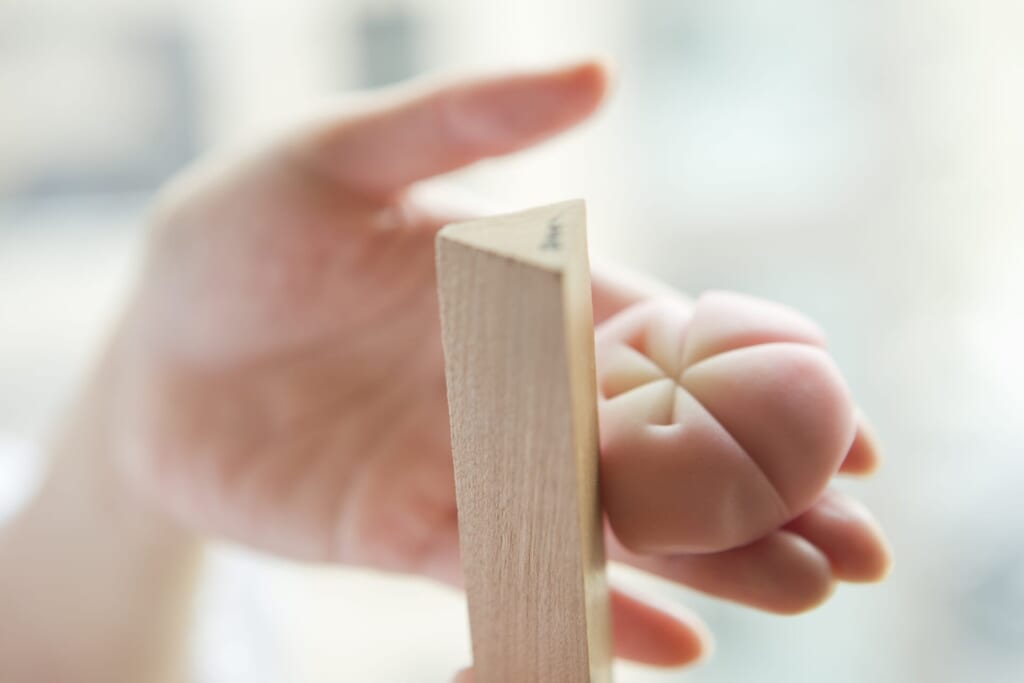
Kyoto-1 Day Trip|Enjoy Handmade Experience! Yuzen Dyeing and Wagashi (Japanese Sweets)
-

【Kyoto】1 Day Trip|Let’s walk around Higashiyama, Kyoto to see the autumn leaves!
-

Arashiyama, Kyoto-1 Day Trip|From Popular Spots to Best Kept Secret Spots!