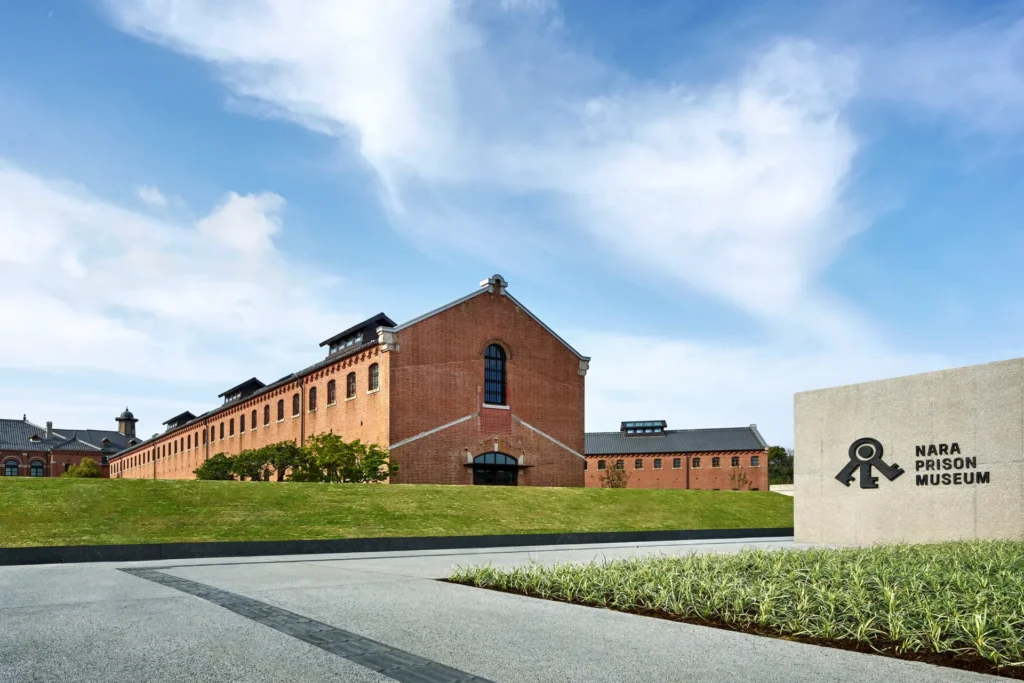
Just a short distance from Nara Park stands a striking red-brick complex unlike any other sightseeing spot in Japan. Opened in April 2026, Nara Prison Museum by Hoshino Resorts is a cultural facility that preserves and reimagines the former Nara Prison, a nationally designated Important Cultural Property.
On this visit, we toured the museum with guidance from the Hoshino Resorts staff and explored the historic grounds firsthand. This on-site report covers everything you need to know before experiencing one of Nara’s newest and most fascinating attractions.
Index
1. Overview of Nara Prison Museum
2. How to Purchase Tickets of Nara Prison Museum
3. Access Information of Nara Prison Museum
4. Recommended duration for Nara Prison Museum
5. Highlights of the Preservation Building and Exhibition Area
6. Nara Prison Museum Shop & cafe
7. Luxury Hotel Stay at HOSHINOYA Nara Prison
1. Overview of Nara Prison Museum
The Five Great Prisons of the Meiji Era—Nara Prison, Nagasaki Prison, Kanazawa Prison, Chiba Prison, and Kagoshima Prison—were constructed during Japan’s modernization period and are renowned for their beautiful brick and stone architecture. Over time, most of these prisons were decommissioned and lost due to aging and redevelopment. Today, the former Nara Prison is the only one where visitors can still see the original Meiji-era structure largely intact.
The property remains owned by Japan’s Ministry of Justice. To help fund the preservation and maintenance of this important cultural asset through tourism, Hoshino Resorts oversees the operation of the facility. The Nara Prison Museum by Hoshino Resorts is divided into two main areas: the Preservation Building, which showcases the historic architecture, and the Exhibition Area, where visitors can learn about the prison’s history and cultural significance.
〇Opening Hours: 9:00 AM – 5:00 PM (last admission at 4:00 PM)
〇Closed: Open year-round (Temporary closures for maintenance may occur. Please check the official website before your visit.)
2. How to Purchase Tickets of Nara Prison Museum
It is highly recommended to reserve your tickets in advance through the museum’s official website.
Please note that tickets are sold for a specific date and admission time. Once purchased, the date, time, and number of visitors cannot be changed. If you need to make any changes, you must first cancel your existing reservation and then make a new booking.
Admission times are divided into the following four time slots, which must be selected at the time of purchase:
・9:00 AM – 10:30 AM
・10:30 AM – 12:00 PM
・12:00 PM – 2:00 PM
・1:00 PM – 4:00 PM
Admission Fees
| Admission Fee | |
| Adults (Residents Outside Japan) | ¥ 3,500 |
| Adults (Residents of Japan) | ¥ 2,500 |
| Adults (Residents of Nara Prefecture) | ¥ 2,000 |
| University & High School Students | ¥ 1,500 |
| Elementary & Junior High School Students | ¥ 700 |
| Preschool Children | Free |
The discounted rate for residents of Japan is available to those who currently live in Japan. Visitors purchasing this ticket type may be asked to present proof of address at the entrance, such as a My Number Card, driver’s license, or another official document showing their residence. Be sure to bring appropriate identification with you on the day of your visit.
3. Access Information of Nara Prison Museum
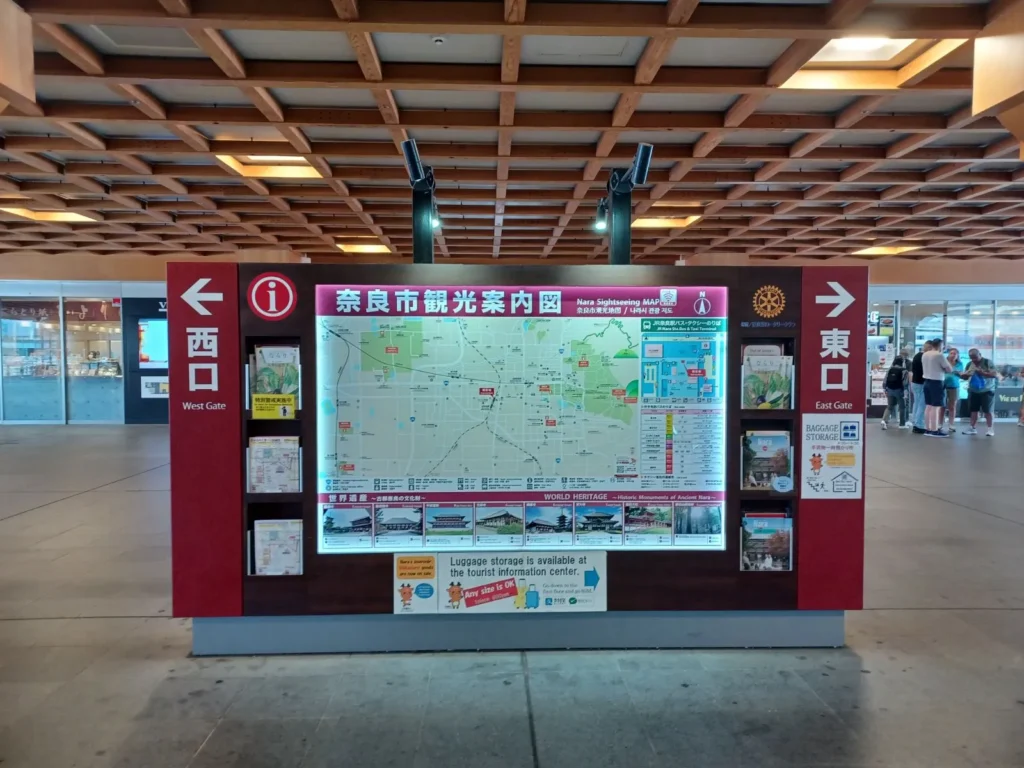
The most convenient way to reach the museum is by taking the direct shuttle bus to “Nara Prison Museum-mae” Bus Stop, located right next to the entrance. The shuttle operates once per hour in both directions, timed to coincide with the museum’s opening hours.
Travel Time
・Approximately 25 minutes from JR Nara Station
・Approximately 18 minutes from Kintetsu Nara Station
Bus Fare
・Adults: ¥250
・Children: ¥130
・Infants (1 to under 6 years old): One child may ride free per accompanying adult
Babies (under 1 year old): Free
Payment Methods
・Payment is made when boarding
・Cash and IC cards such as ICOCA
Passengers can board or disembark at the following four locations (JR Nara Station / Kintetsu Nara Station / Kencho-mae (Prefectural Office) / Hannyaji Temple)
In this article, we will focus on the boarding locations and directions from JR Nara Station and Kintetsu Nara Station.
〇From JR Nara Station (Bus Stop No. 11, West Exit)
JR Nara Station has a single ticket gate. Although there are two station exits, be sure to leave via the West Exit.
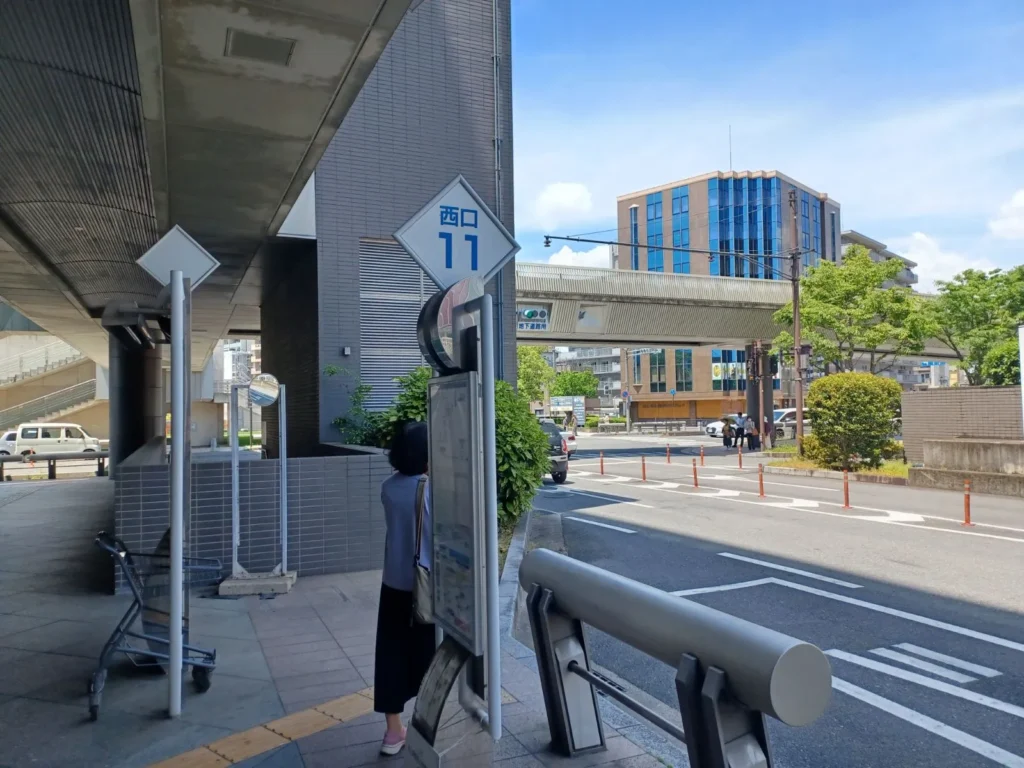
You can easily reach the West Exit by following the station signs. Once outside, head to Bus Stop No. 11 at the bus terminal and board the shuttle bus to the museum.
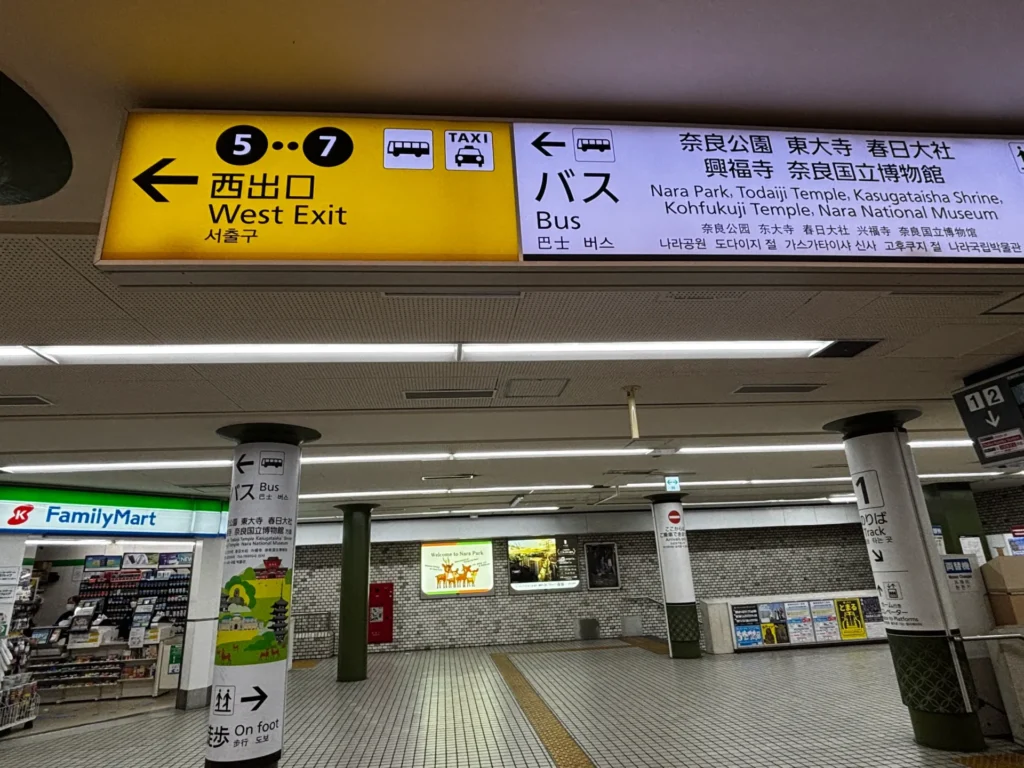
〇From Kintetsu Nara Station (Bus Stop No. 2)
Kintetsu Nara Station has two ticket gates. To access the shuttle bus stop, use the West Ticket Gate.
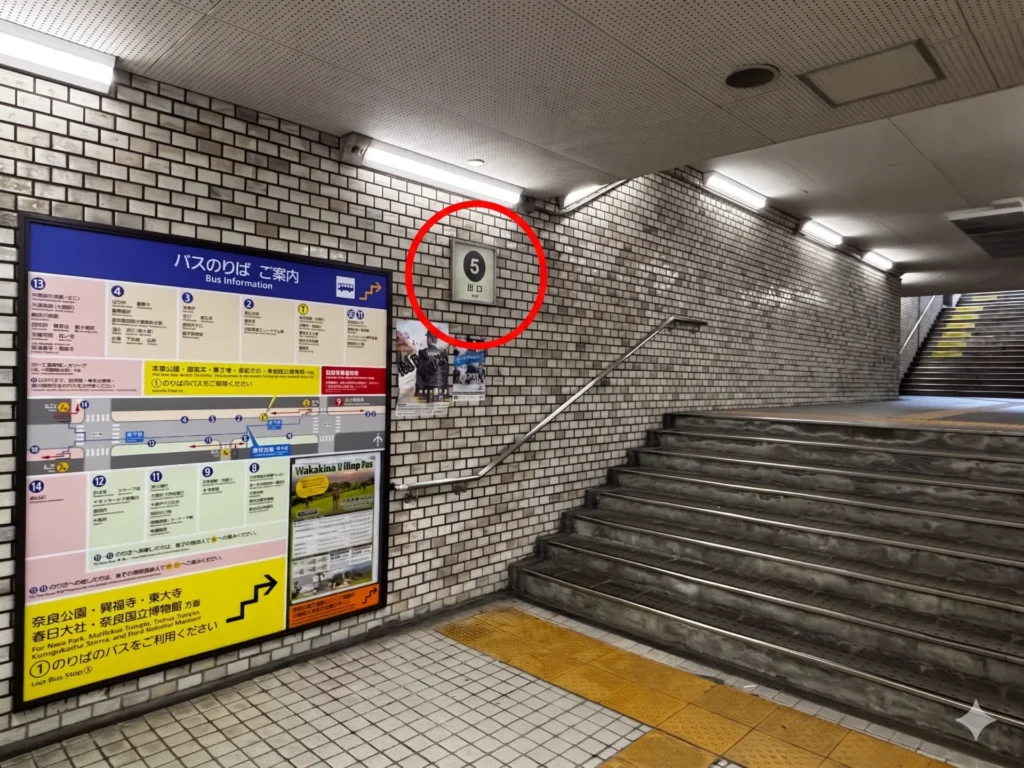
After exiting the gate, proceed to Exit 5 on your right.
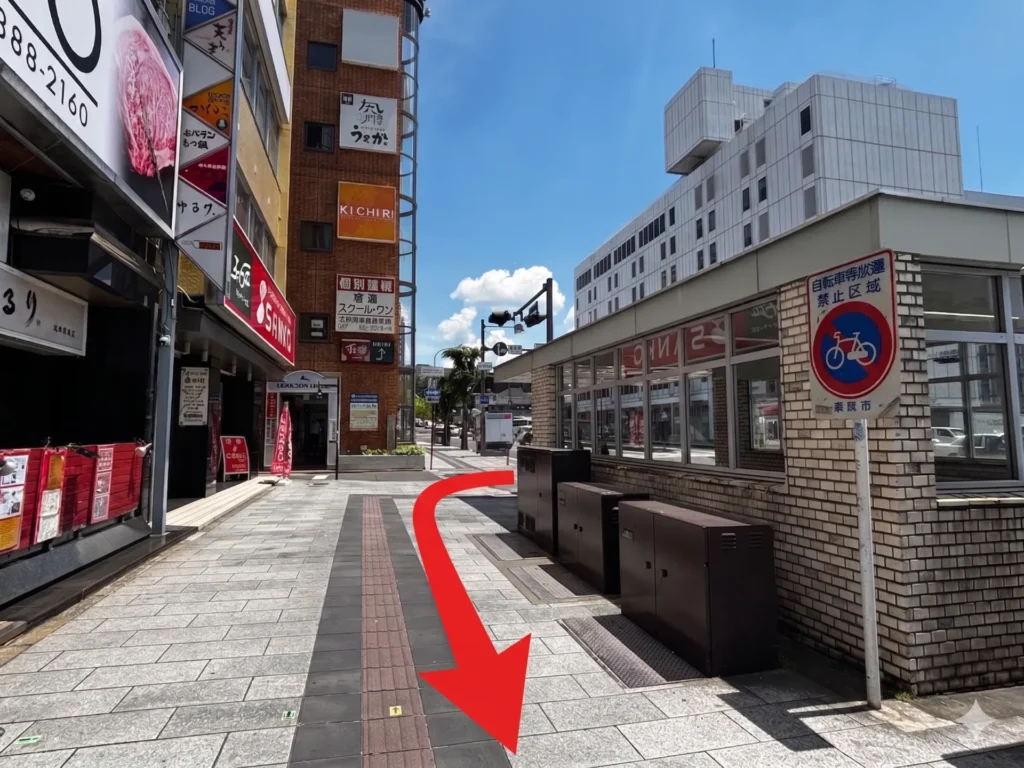
Go up the stairs, and you will find the bus stop area just outside.
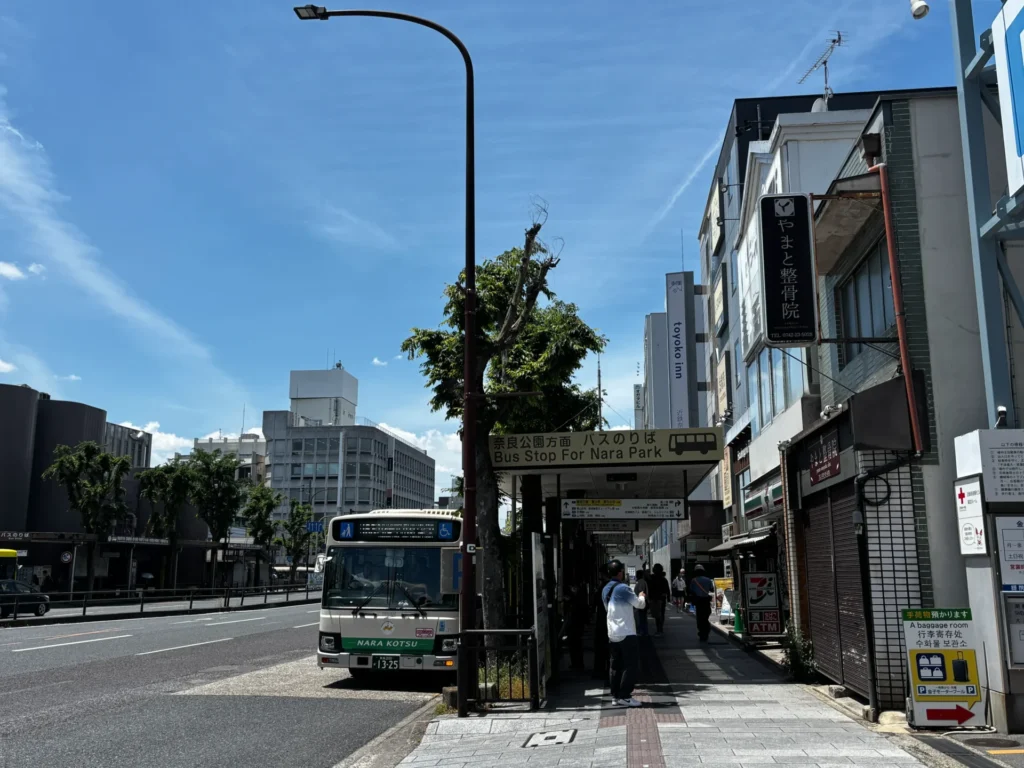
Board the shuttle bus from Bus Stop No. 2.
The shuttle operates as a standard route bus, so bringing large luggage such as suitcases can be difficult due to limited space onboard. It is recommended that you leave them at your hotel or at JR Nara Station or Kintetsu Nara Station before heading to the museum.
4. Recommended duration for Nara Prison Museum
According to the museum’s official website, most visitors spend approximately 1.5 to 2 hours exploring the Nara Prison Museum.
If you would like to take your time fully appreciating the architecture, it is a good idea to allow around 2.5 hours for your visit. Those planning to stop by the cafe or the museum shop should consider setting aside an additional 30 minutes to 1 hour.
5. Highlights of the Preservation Building and Exhibition Area
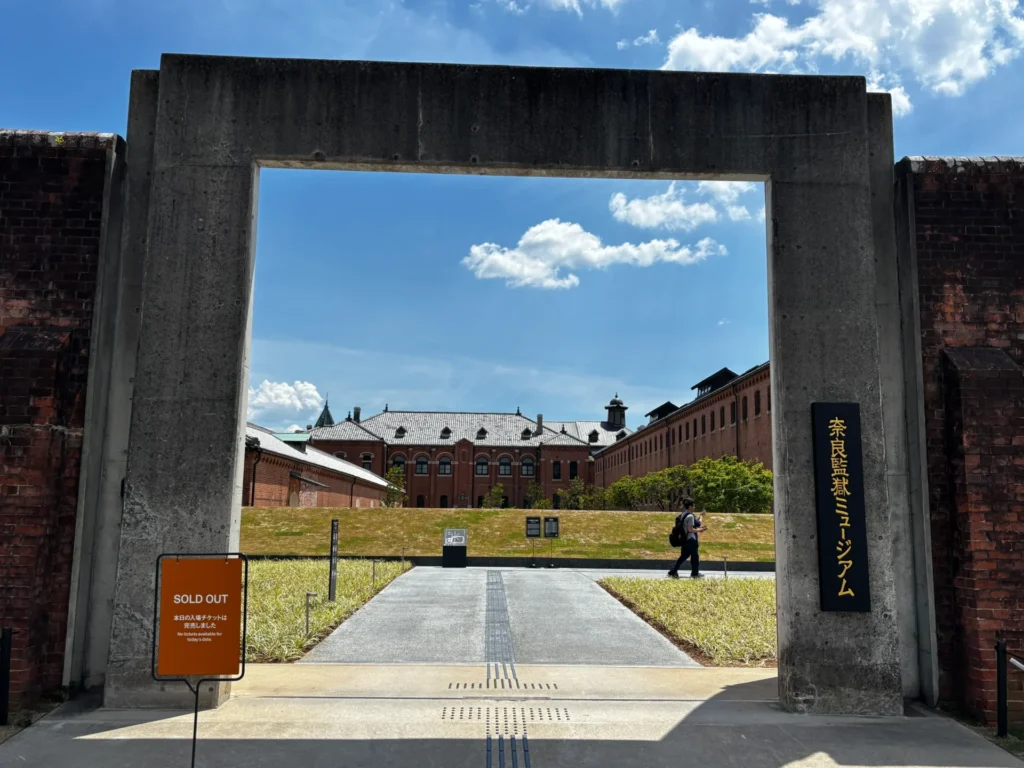
Visitors enter the Nara Prison Museum through a large gate and pass into a striking complex surrounded by red-brick walls. Brick architecture is one of the defining features of the former prison, and remarkably, many of the bricks used throughout the site were made by inmates themselves alongside skilled brick craftsmen. It is said that more than 150,000 prisoners were involved in the construction of the facility.
The museum is divided into two main sections, the Preservation Building and the Exhibition Area, both of which are designed to be explored along a designated route.
The tour begins with the Preservation Building. From the entrance, visitors follow a path that circles the exterior of the historic structure. As there is very little shade along this outdoor section, visitors traveling during the summer months may find it helpful to bring a parasol or a hat.
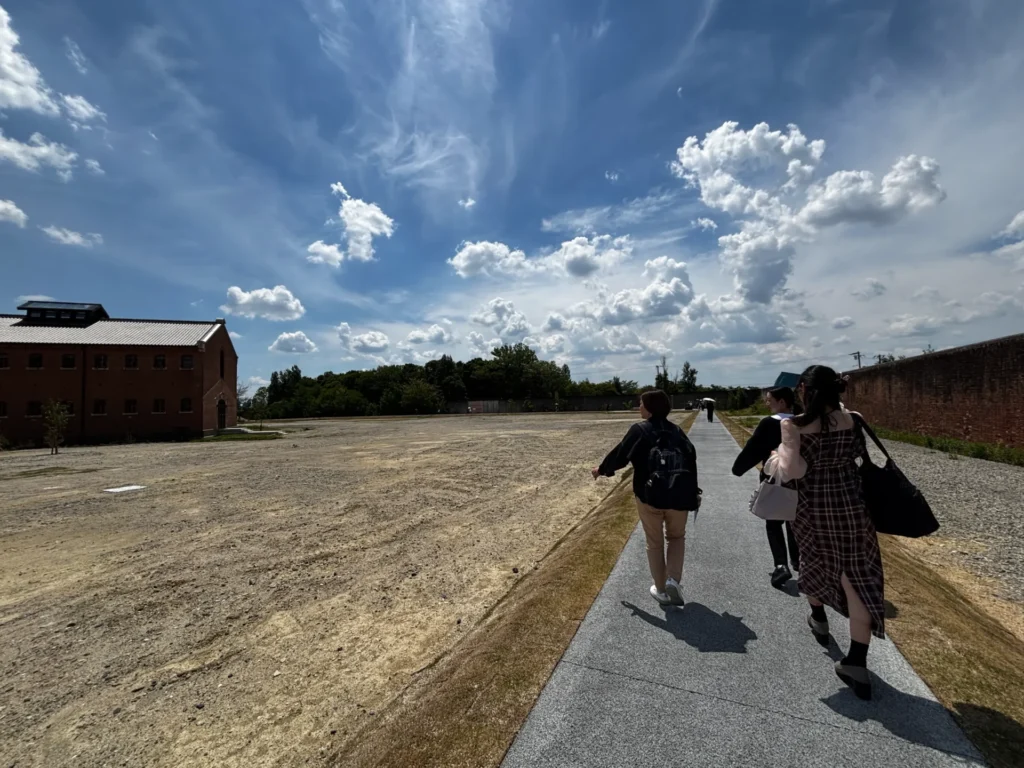
One of the best places to appreciate the prison’s distinctive Haviland System layout is the area between the entrance and the Preservation Building. There is even a designated photo spot marked along the route, making it the perfect place to capture the unique radial design of the complex.
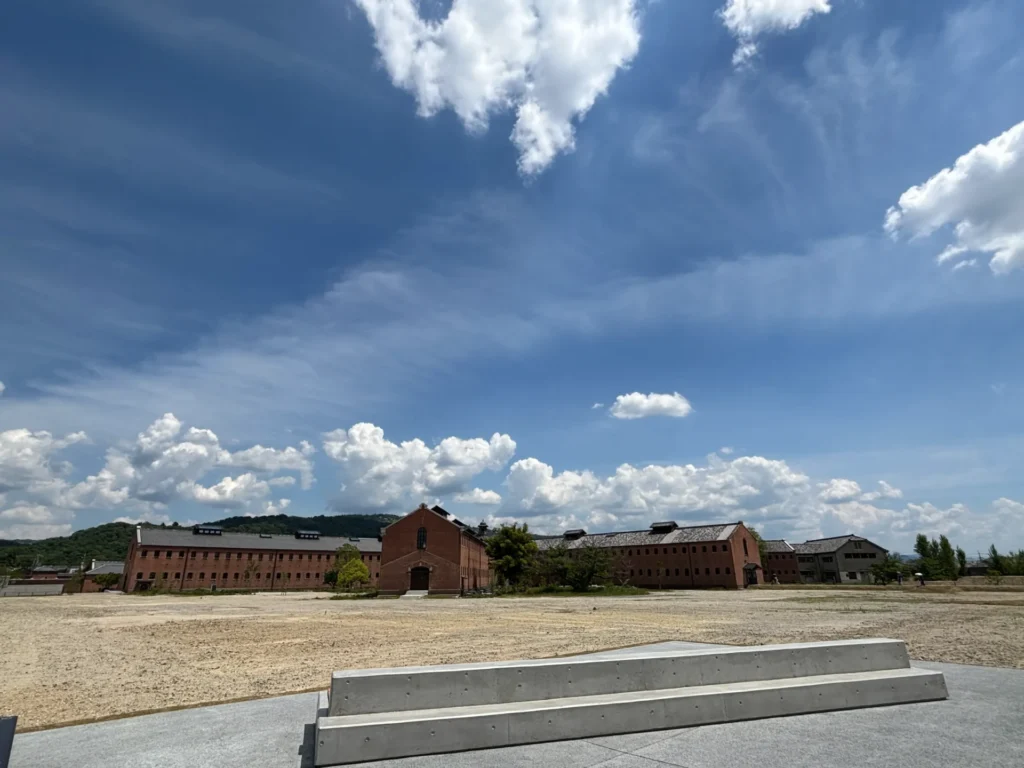
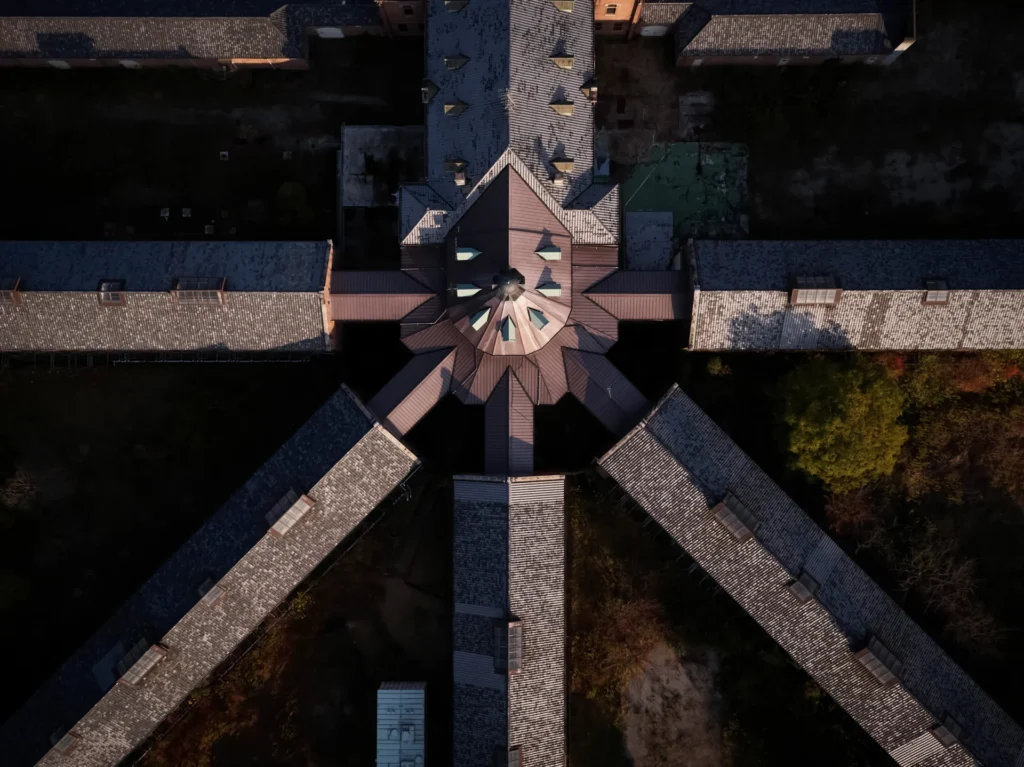
This aerial photograph clearly shows the prison’s distinctive Haviland System design, with the buildings extending outward in a radial pattern from a central hub. The unique layout can be easily appreciated from this perspective.
Preservation Building
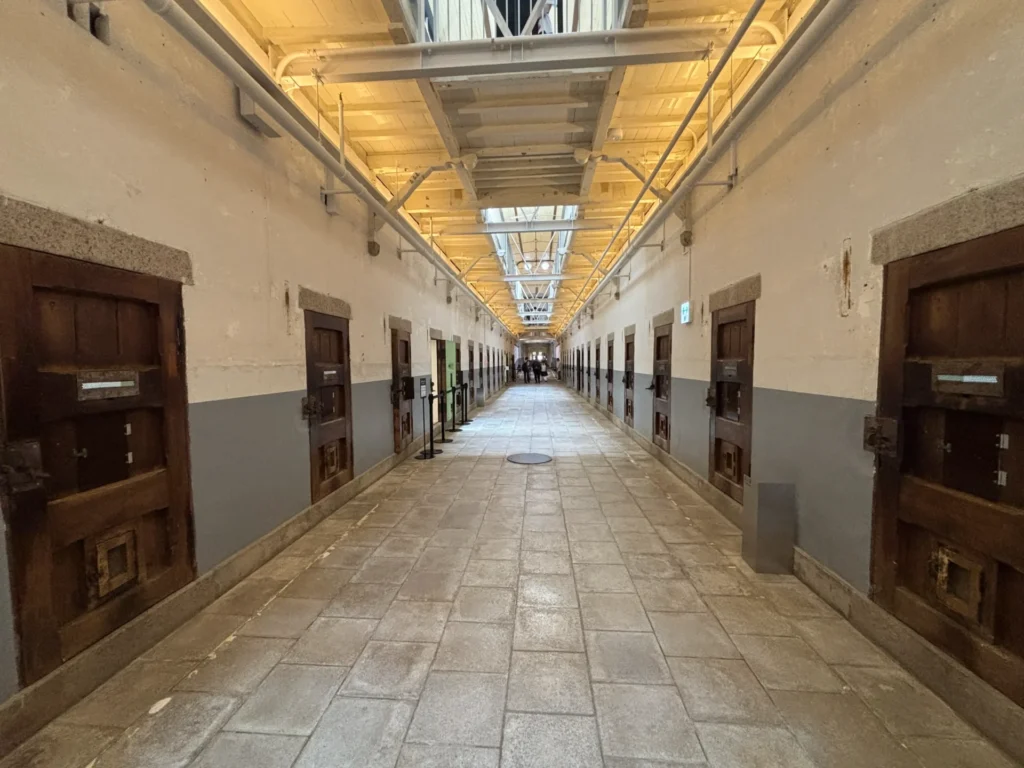
The Preservation Building is the Third Cell Block, located at the center of the five prison wings that extend outward in a radial pattern.
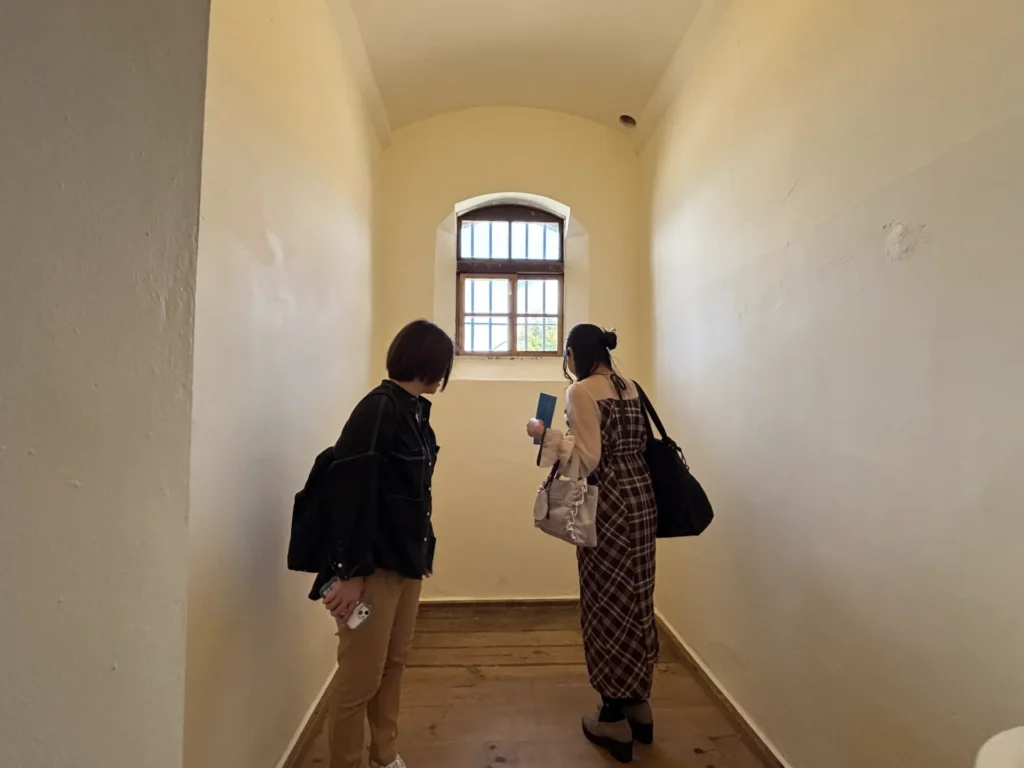
All of the cells are single-occupancy cells, and the corridor walls, doors, and many other features have been preserved in their original condition. Some of the cells are open to visitors, allowing you to step inside and experience the space where inmates once lived.
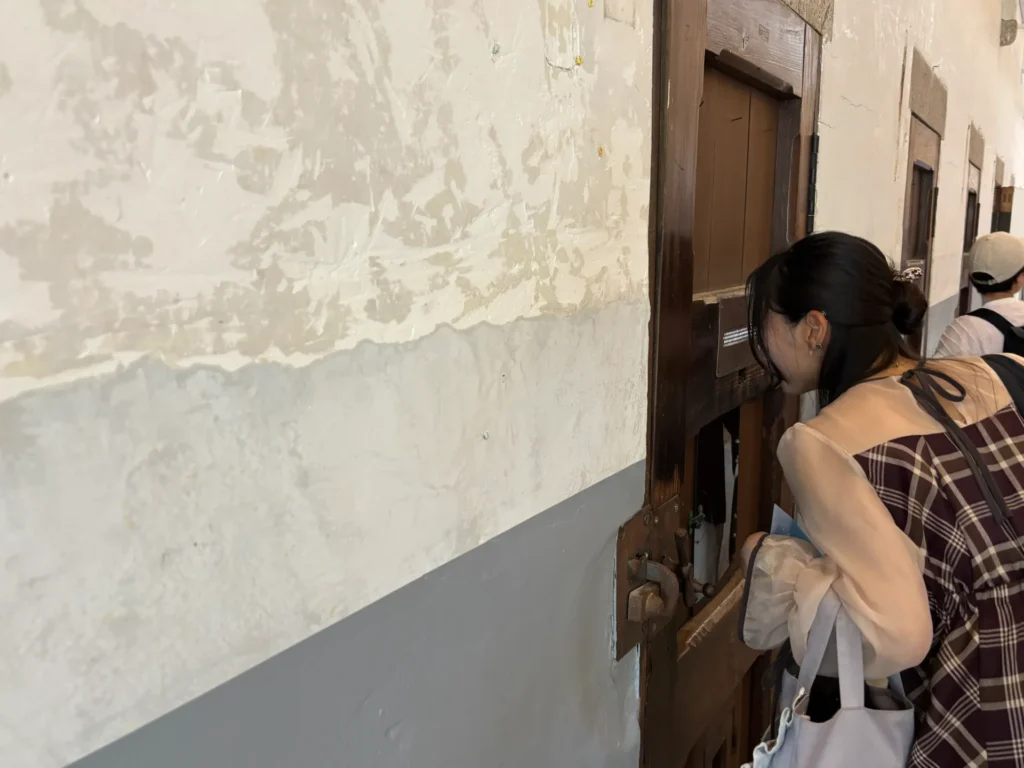
Visitors can also peer into the cells from the guards’ perspective, offering a glimpse of what prison supervision was like at the time.
Both the corridors and the cells are surprisingly bright, filled with natural light. The space is far more open and well-lit than many people might imagine when they think of a prison. This brightness was intentional—the building was designed with consideration for human rights, incorporating ample natural lighting to create a healthier living environment for inmates.
Three Exhibition Areas
The exhibition area of the Nara Prison Museum is divided into three sections, each featuring exhibits centered around a different theme.
A History and Architecture
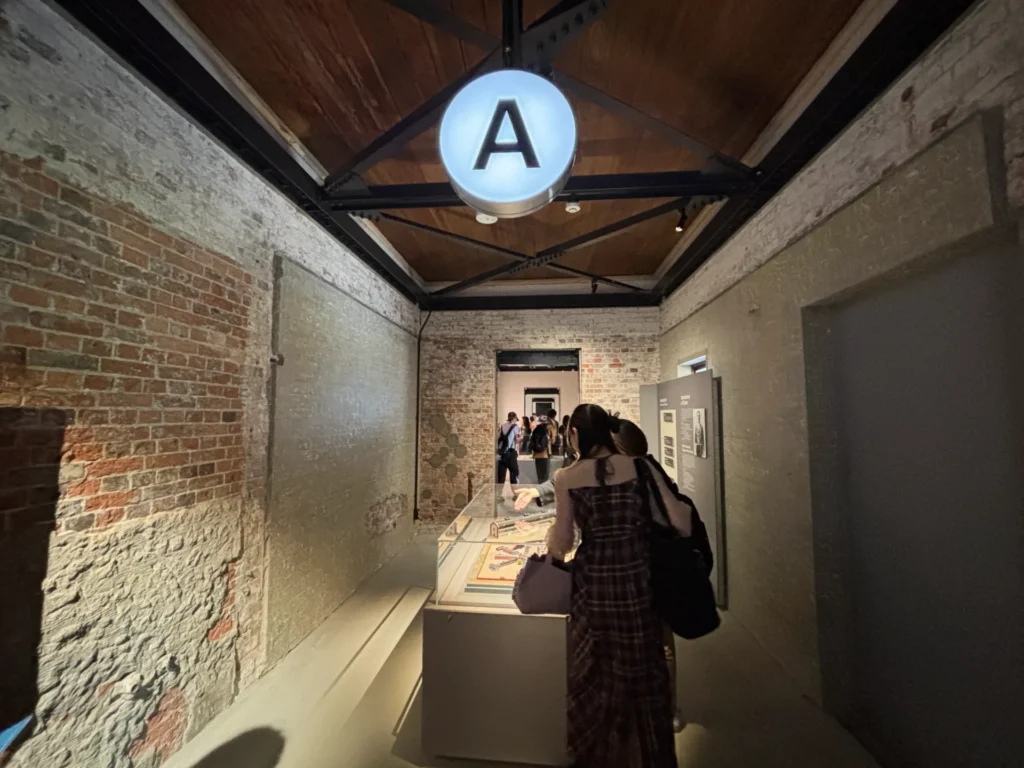
This section introduces the history of Japan’s prison modernization efforts as well as the story of the former Nara Prison. Visitors can also learn in detail about the prison’s distinctive Haviland System and the ideas behind its radial design.
One feature not to miss is the wall located just inside Block A. Over the years, the original brickwork was covered with white plaster, but part of the plaster has been removed to reveal the historic bricks underneath, allowing visitors to see the original structure as it once appeared.
B Discipline and Daily Life
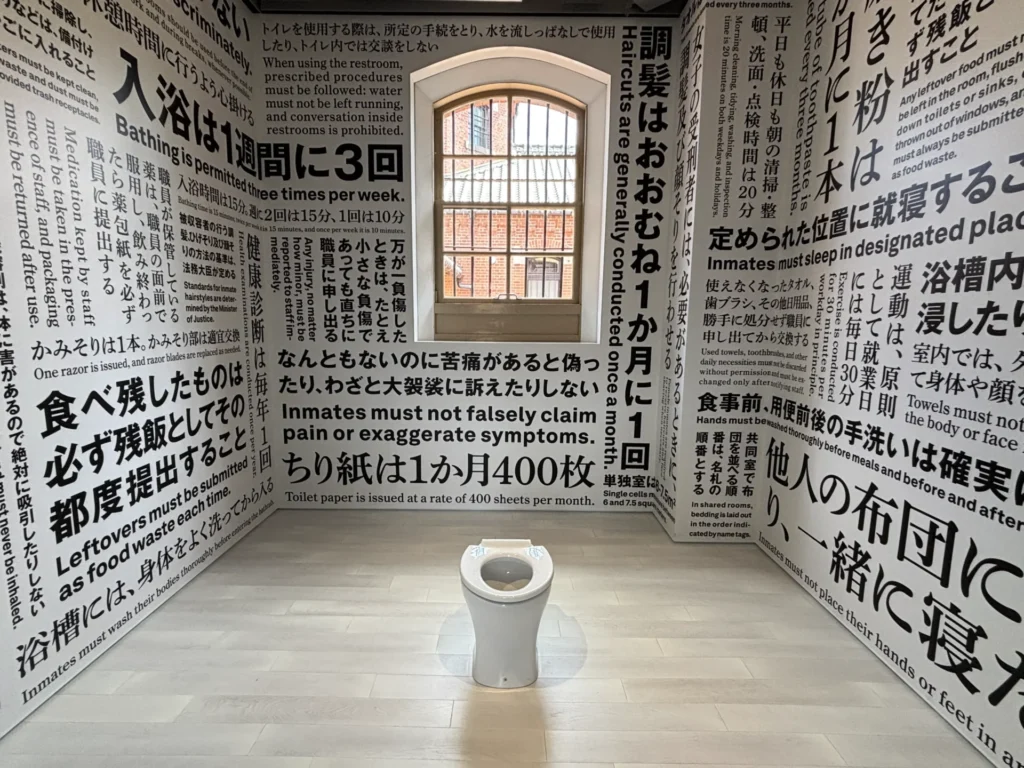
This section explores daily life in modern Japanese prisons, including meals, work programs, and rehabilitation efforts.
Visitors can watch videos of the work actually carried out by inmates and view examples of the finished products they create. These vocational programs not only support rehabilitation but also help preserve traditional craftsmanship and specialized skills that are becoming increasingly rare in local communities due to a shortage of successors.
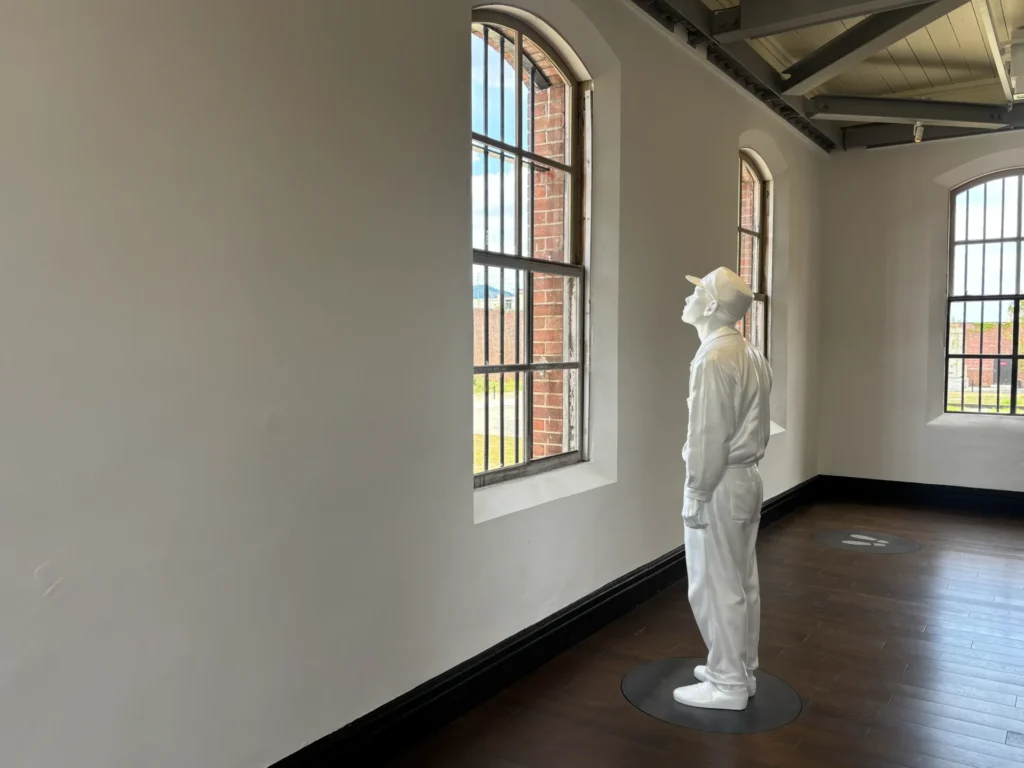
Visitors can also experience the view from a prison cell window—the same scenery that inmates may have looked out upon during their limited moments of free time.
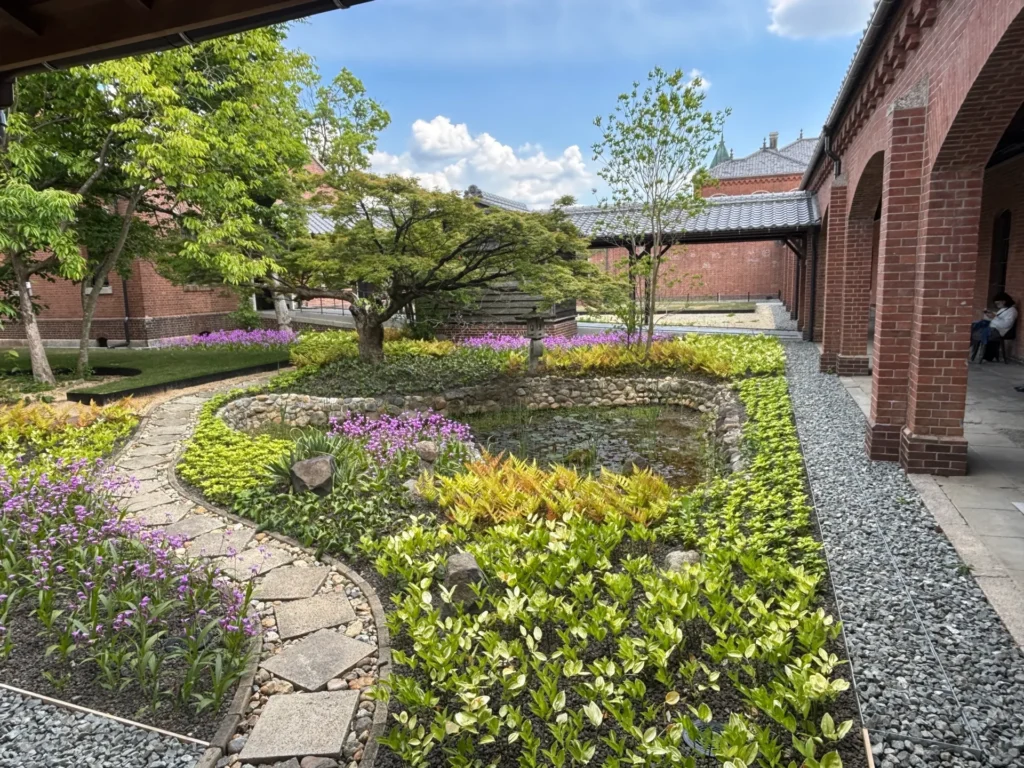
The pond and maple trees that visitors pass while moving between the exhibition areas have also been preserved from the prison’s operational days.
C Art and Incarceration
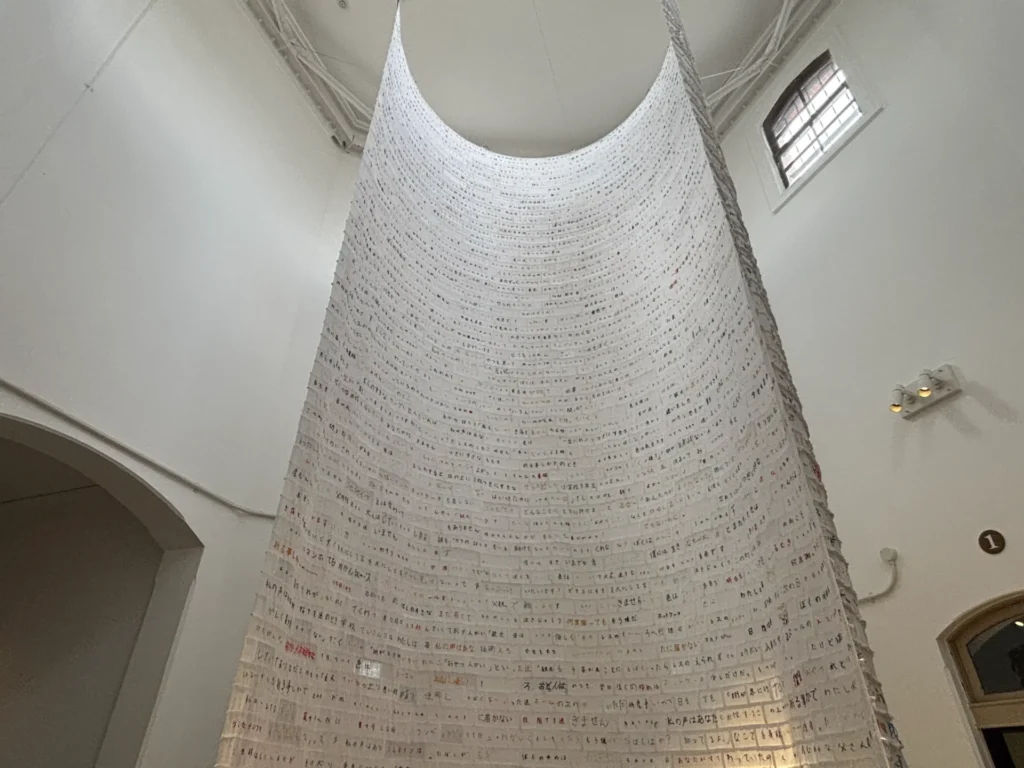
This area, once used as the prison infirmary, has been repurposed as a gallery space showcasing works by five artists alongside creations by inmates. Visitors can also view original manga artwork by Kazuichi Hanawa, who drew on his own experiences of incarceration in his work.
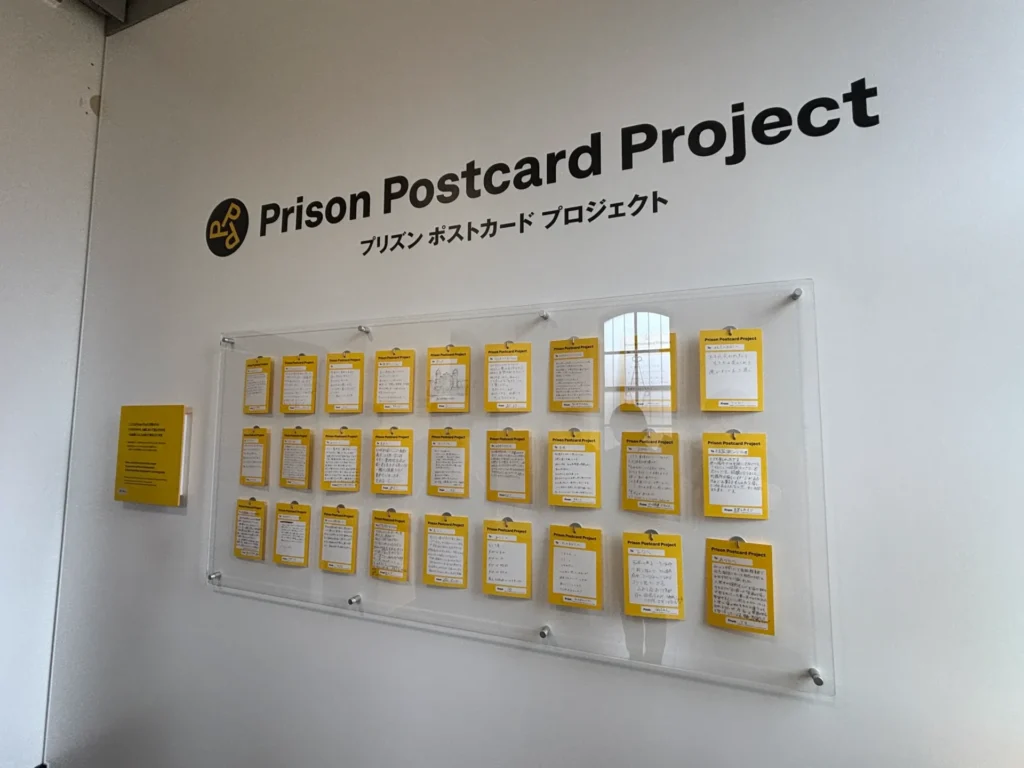
One initiative unique to the Nara Prison Museum is the Prison Postcard Project. Visitors are invited to write down their thoughts and reflections after viewing the exhibits, and some of these postcards are planned to be delivered to correctional facilities, creating a meaningful connection between visitors and those currently living within the prison system.
At the end of the exhibition, visitors can also view a collection of prison art, including paintings, calligraphy, and literary works created voluntarily by inmates.
6. Nara Prison Museum Shop & cafe
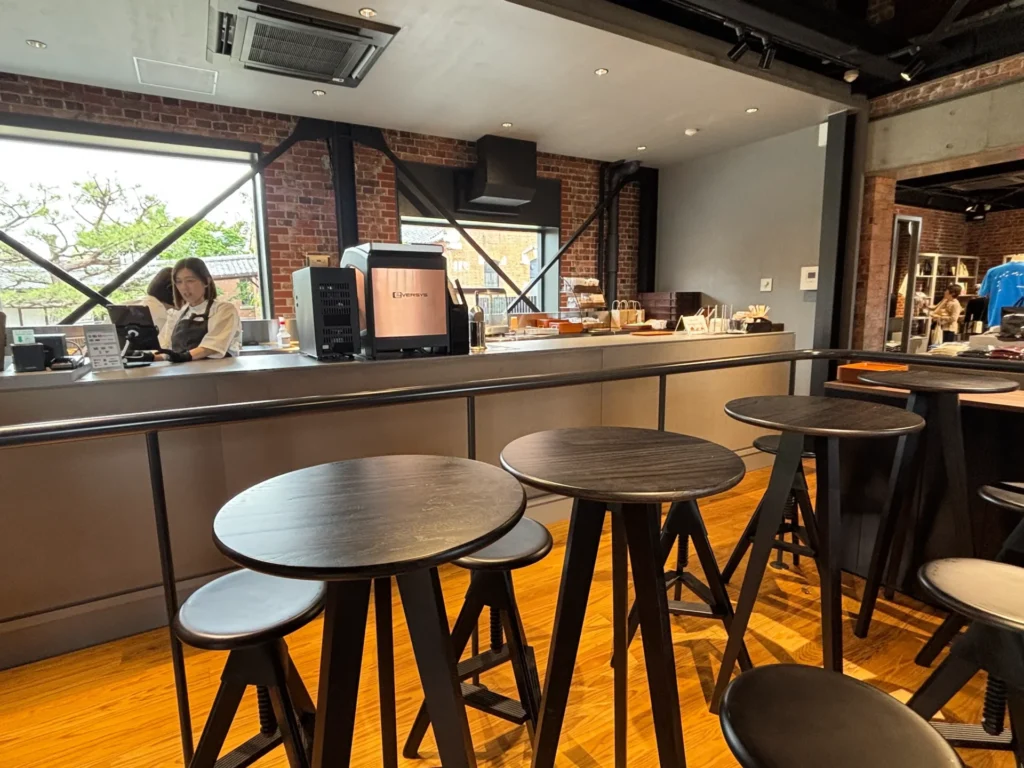
At the cafe, visitors can enjoy food and drinks inspired by the unique history and stories of the former Nara Prison.

One item you won’t want to miss is the Brick Style Curry Bread. Curry was reportedly one of the most popular meals served during the days of the former Nara Juvenile Prison. Its rectangular shape is designed to resemble the prison’s iconic red bricks. The spicy version was particularly delicious, while a mild curry bread is also available for those who prefer less heat.
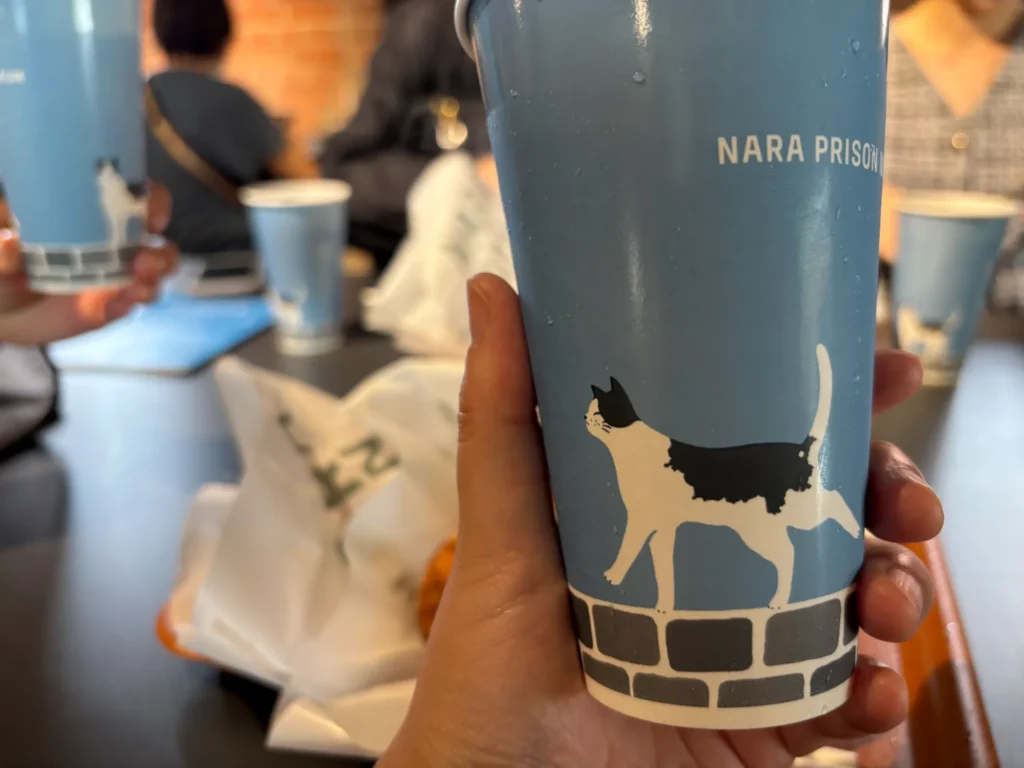
Another charming detail can be found on the cafe cups. The cat illustration printed on them is actually shaped like Nara Prefecture, and the small white dot indicates your current location. It’s a thoughtful design touch that’s easy to overlook, so be sure to take a closer look.
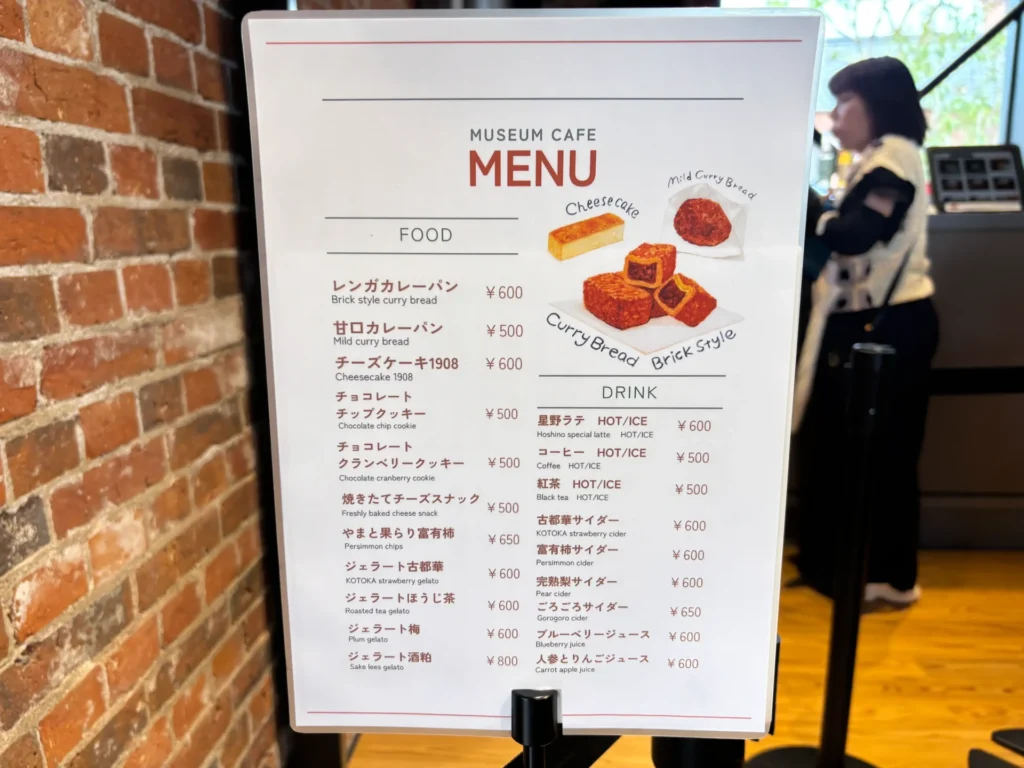
Other menu items include cheesecake and sparkling drinks made with fruits grown in Nara Prefecture. Since the cafe does not offer full lunch meals, it is best suited for a light snack or coffee break.
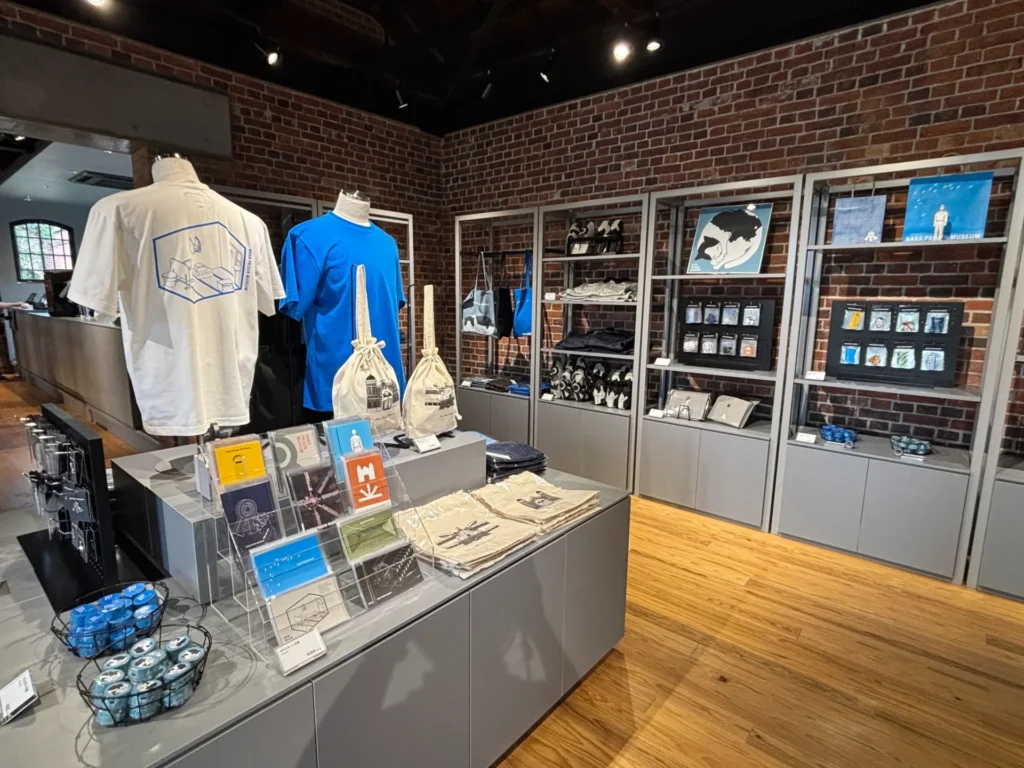
The museum shop features a range of distinctive products designed by Taku Satoh and his design studio, TSDO. Popular items include original pin badges and T-shirts emblazoned with the words “Nara Prison.”
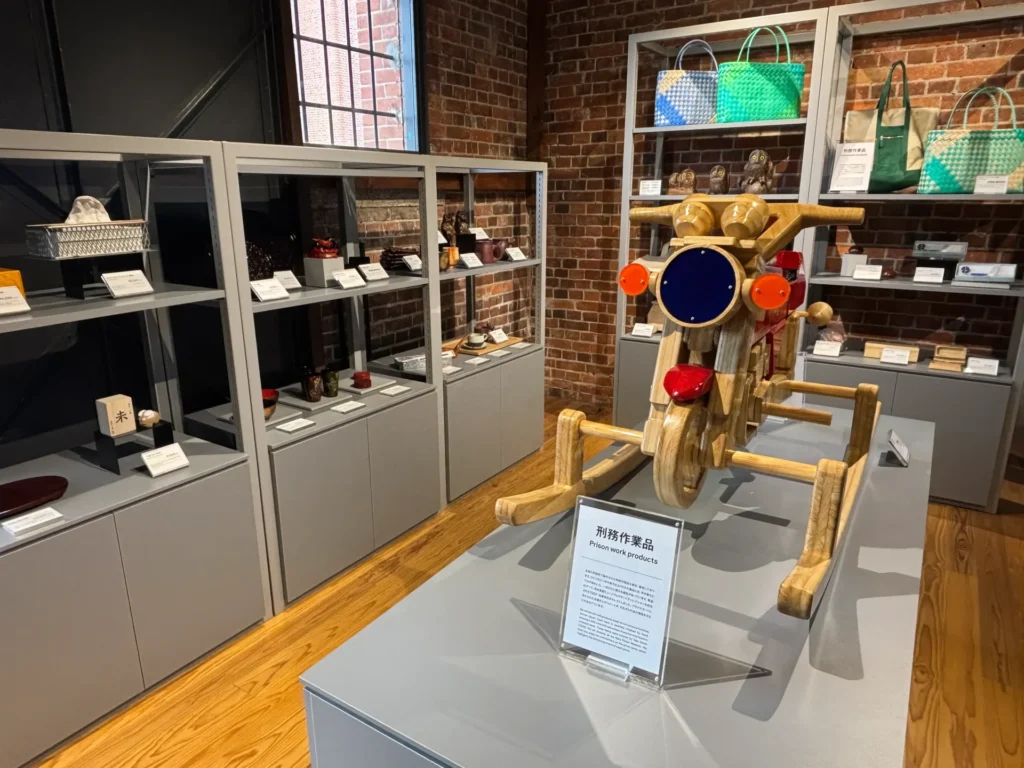
Visitors can also purchase some of the prison work products featured in the exhibition area.
As there is no online shop and these items are available only to museum visitors, it’s worth double-checking your purchases before leaving so you don’t miss out on a favorite souvenir.
7. Luxury Hotel Stay at HOSHINOYA Nara Prison
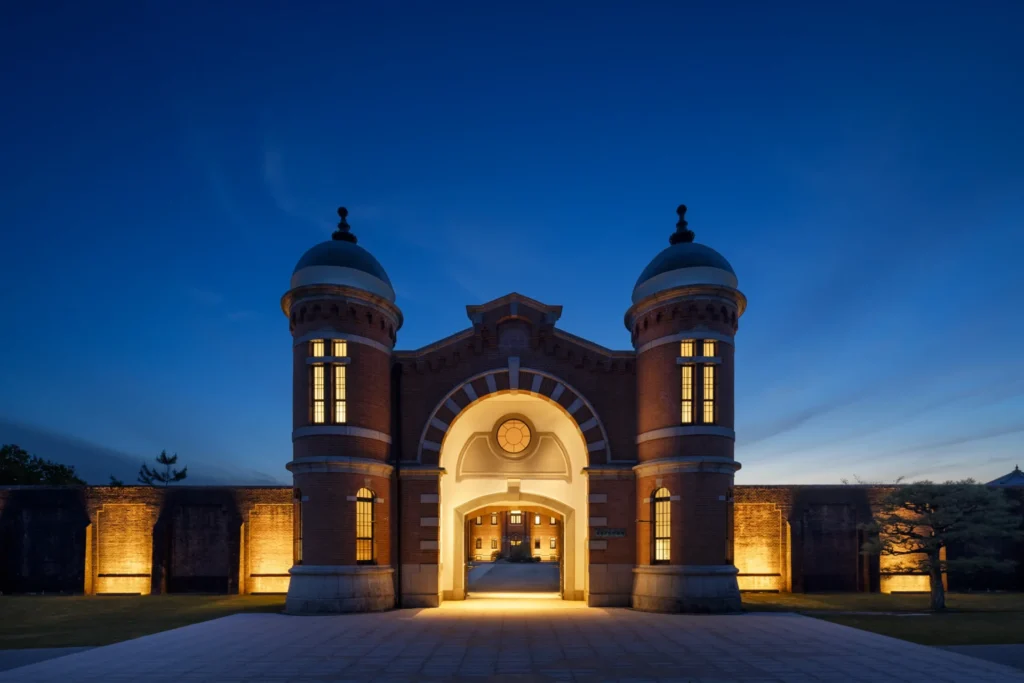
HOSHINOYA, the luxury hospitality brand known for creating extraordinary experiences through unique concepts at each of its properties, will open HOSHINOYA Nara Prison on June 25, 2026. The hotel is housed within the former Nara Prison, a nationally designated Important Cultural Property.
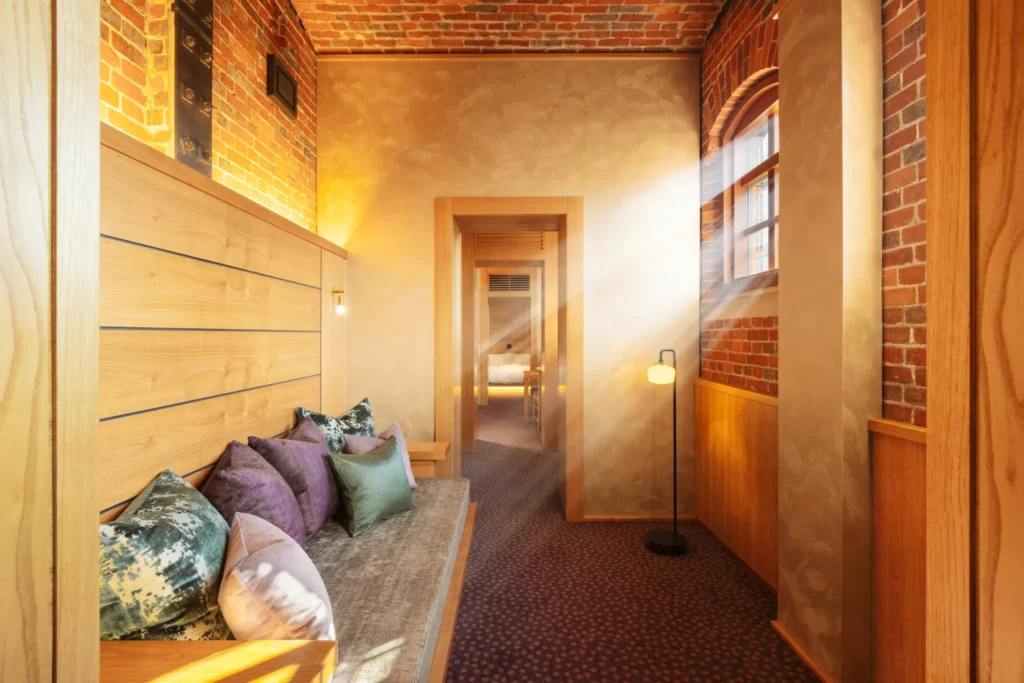
The ninth property in the HOSHINOYA collection, “HOSHINOYA Nara Prison” is built around the concept of “An Important Cultural Property at Dawn.” Former solitary confinement cells have been thoughtfully transformed into elegant and tranquil guest accommodations. All 48 guest rooms are designed as suites.
As a former prison, Nara Prison Museum offers an experience unlike any other, seamlessly blending a remarkable historic building with thoughtfully curated contemporary exhibitions.
As one of Nara’s newest attractions, it is well worth adding to your itinerary. If you’re looking for a meaningful and memorable experience beyond the city’s traditional sightseeing spots, be sure to pay a visit.


